HCMC – HCMC is seeking greater private sector participation, particularly from technology companies and research institutions, to support its smart city ambitions.
Speaking to the media on the sidelines of the Smart City Asia 2026, which opened on May 6, Vice Chairman of the HCMC’s Committee Nguyen Manh Cuong said the city was moving from the planning phase to full scale implementation of smart city initiatives, with data and digital technologies at the center of urban governance.
However, the southern economic hub, home to more than 14 million people, faces rising pressure to improve real-time urban management, public services and data processing following recent administrative restructuring.
The need for real-time urban management, large-scale data processing and efficient public service delivery requires substantial investment resources.
Cuong acknowledged that the state budget alone could not meet all investment needs for smart city development. “Managing a large-scale urban area like HCMC cannot rely solely on the state budget, but requires mobilizing all social resources,” Cuong said.
The city plans to proactively define specific challenges arising from urban management in order to attract participation from businesses, research institutes and universities.
Authorities expect the “triple helix” cooperation model involving the government, academia and enterprises to help address challenges related to technology, data and urban operations.
The city will also study special mechanisms and policies aimed at encouraging private sector participation in providing solutions, technologies and resources for smart city development.
HCMC is currently drafting its smart city development plan for the 2026-2030 period, with a vision toward 2050.
One of the key pillars of the plan is the development of integrated population and sectoral databases based on the principles of being “accurate, sufficient, clean, live and interconnected,” in line with the government’s modern governance agenda. Smart operation centers are expected to support real time monitoring and decision making.
Over the longer term, HCMC aims to build a citizen and business centered smart city model, with data and technology serving as the foundation for improving public services and the business environment.
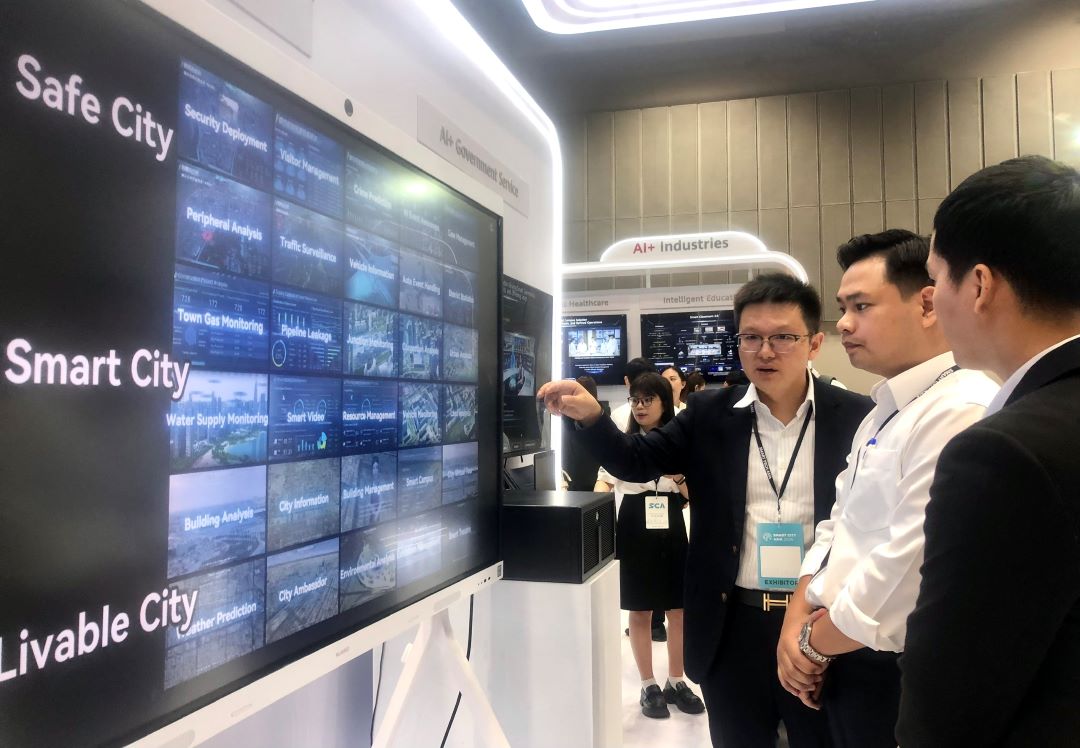
Smart City Asia 2026 features more than 500 technology booths over three days and is expected to attract over 16,000 visitors.
Technology groups including Huawei, Samsung and Dell, along with domestic firms, are showcasing solutions related to artificial intelligence, the Internet of Things, smart transportation, green energy and urban management.
With the scale of the event and the strong participation of businesses, Smart City Asia 2026 is seen not only as a policy forum but also as a “testing ground” for public private partnership models, where smart city ideas can be rapidly translated into practical applications.