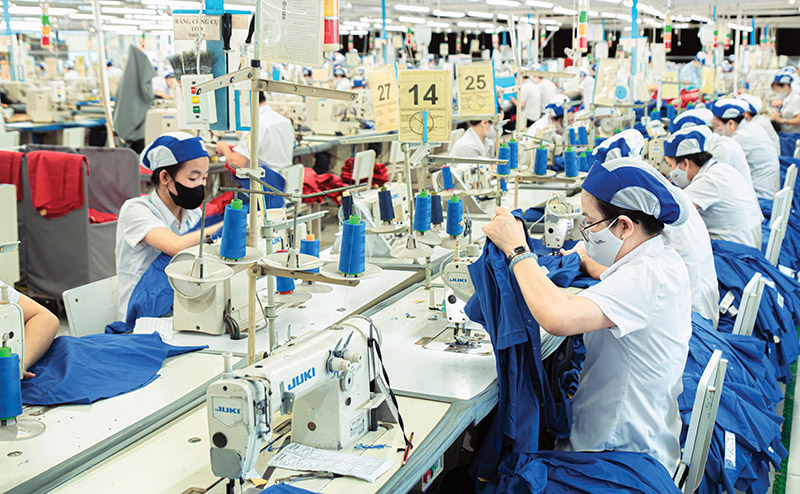
Digital product passports and recycled-content requirements are emerging as major obstacles to Vietnamese textile and garment exports to the EU market. Yet these issues receive far less attention than regulations such as the EU Deforestation Regulation (EUDR) or the Carbon Border Adjustment Mechanism (CBAM). The EU is considered a stable but highly demanding market for Vietnam’s textile and garment industry. Complying with the bloc’s green standards could help Vietnamese manufacturers strengthen their competitiveness and gain easier access to other major markets, particularly the U.S., Japan, South Korea, and China. Changing rules of the game The EU’s Ecodesign for Sustainable Products Regulation (ESPR) officially took effect in July 2024, marking a major shift in sustainability requirements for goods entering the bloc. In April 2025, the EU designated textiles as one of the first sectors subject to ESPR compliance. Specific delegated acts for the textile industry are expected to be adopted in the second half of 2027, with enforcement likely to begin around 18 months later. What challenges will the ESPR pose for Vietnam’s textile and garment industry? Speaking at Saigontex 2026, held in mid-April in HCMC, Nguyen Thi Tuyet Mai, vice general secretary of the Vietnam Textile and Apparel Association (VITAS), […]
Navigating EU sustainability standards
By Ricky Ho