
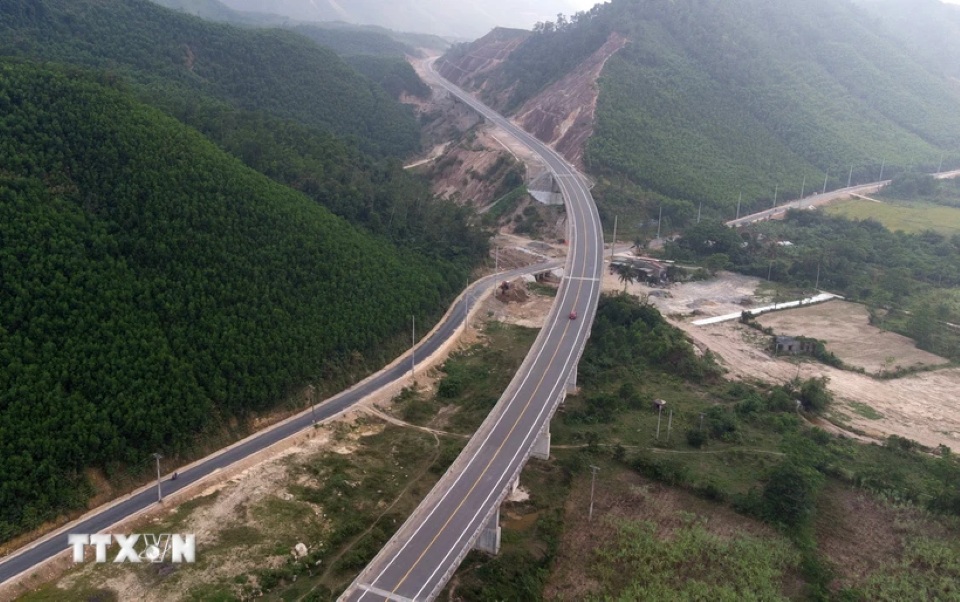
HCMC – More than 160 kilometers of the north-south expressway in central Vietnam, stretching from Quang Ngai to the Cu Mong Tunnel, will be opened to traffic on April 29.
The opening covers two key components, including Quang Ngai–Hoai Nhon and Hoai Nhon–Quy Nhon, along with part of the Quy Nhon–Chi Thanh section. The move, timed for the April 30 holiday, is expected to ease congestion on National Highway 1 and significantly cut travel time across the region. The route will help improve connectivity across central localities, linking Quang Tri, Hue, Danang, Quang Ngai, Gia Lai, Dak Lak and Khanh Hoa.
The Quang Ngai–Hoai Nhon section runs about 88 kilometers and is funded by more than VND21.11 trillion from the state budget. A highlight of the project is the completion of three major tunnels, including Tunnel No. 1 (Duc Pho), Tunnel No. 2 (Huan Phong) and Tunnel No. 3 (Binh De).
In its initial phase, the expressway will operate with four lanes and a maximum speed of 90km/h. No tolls will be charged on this section for now, though a temporary toll station at the starting point will remain in operation to support closed toll collection for the Danang–Quang Ngai expressway.
At the same time, the Hoai Nhon–Cu Mong Tunnel section, including the entire Hoai Nhon–Quy Nhon project and nearly 20 kilometers of the Quy Nhon–Chi Thanh section passing through Gia Lai and Dak Lak, will also be opened to traffic.
According to the Project Management Unit 85, key sections and interchanges have been inspected and accepted by the State inspection council, with asset handover for management and operation completed, ensuring readiness for safe traffic from April 29. As rest stops along the route are still under construction, authorities have advised drivers to check fuel levels and plan their trips in advance before entering the expressway.
After opening, contractors will continue to complete remaining components such as intelligent transport systems (ITS) and feeder roads, with the aim of increasing the design speed to 120km/h.