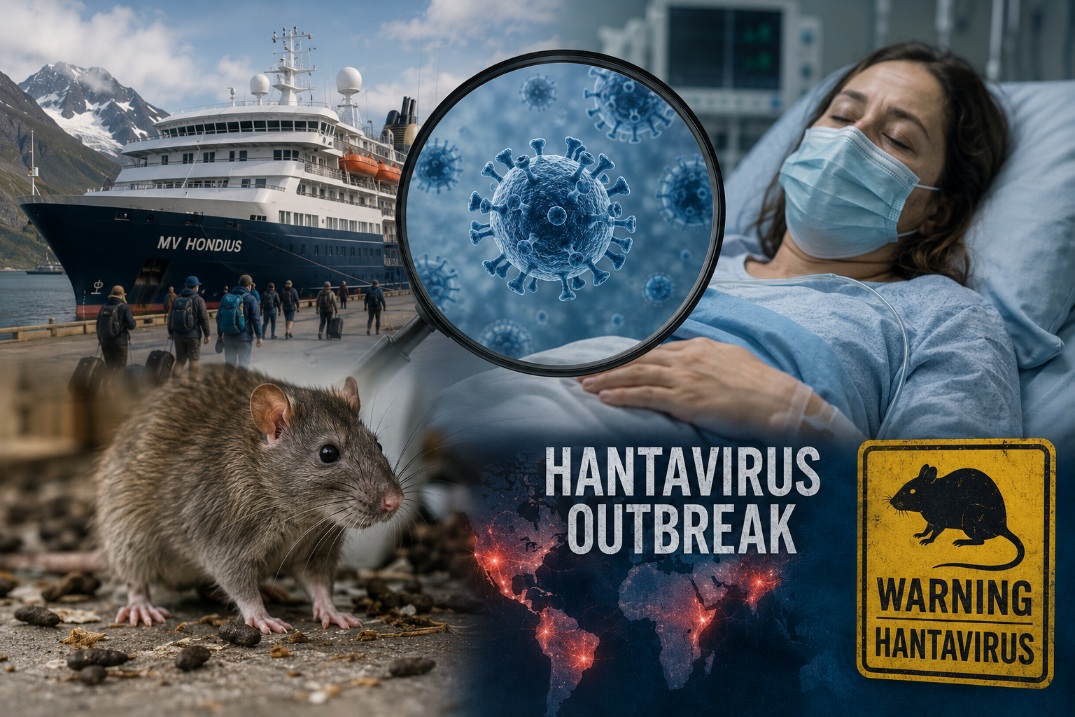
Reports of Hantavirus infections aboard an international cruise ship have drawn global attention to the disease, which experts say can initially mimic seasonal flu but may rapidly progress to severe respiratory illness. What has concerned health experts is that the cases were linked to the Andes virus, a rare Hantavirus strain that has previously shown limited human-to-human transmission under conditions of very close, prolonged contact. However, WHO and epidemiologists emphasized that the virus does not spread as easily as Covid-19, according to the Suc Khoe & Doi Song news site. Hantavirus is a group of viruses carried mainly by rodents, particularly rats and mice. Humans are typically infected through contact with the urine, droppings, or saliva of infected rodents, or by inhaling airborne particles from dried rodent waste in warehouses, abandoned buildings, damp environments, or food storage areas. The virus can cause two serious illnesses: Hantavirus Pulmonary Syndrome (HPS), which damages the lungs and may lead to acute respiratory failure Hemorrhagic Fever with Renal Syndrome (HFRS), which affects the kidneys and can cause bleeding disorders Among the two, HPS is considered particularly dangerous because patients can deteriorate rapidly within just a few days. How does Hantavirus spread? Hantavirus is transmitted […]
Staying safe from hantavirus
The Saigon Times