
HCMC – Exchange and interest rates are projected to be the two most critical variables for Vietnam’s financial markets in 2026 amid global geopolitical uncertainties, according to experts from Singapre’s United Overseas Bank (UOB) at a seminar on March 12.
While Vietnam’s economic foundations remain solid, the country has come under mounting pressure from rising oil prices due to Middle East tensions and the safe-haven demand bolstering the U.S. dollar.
Despite these external headwinds, UOB maintains a positive outlook on Vietnam’s domestic resilience. The manufacturing purchasing managers’ index climbed to a four-month high of 54.3 in February, while January’s exports surged 29.7% year-on-year to US$43.2 billion.
Although a trade deficit of US$1.78 billion was recorded in early 2026 due to a 49.2% spike in imports of production machinery, Vietnam’s trade surplus with the U.S. jumped 29% to US$12 billion. Furthermore, the U.S. Supreme Court’s recent rejection of certain tariffs under the International Emergency Economic Powers Act (IEEPA) is seen as a favorable signal for Vietnamese exporters.
Regarding monetary policy, UOB predicts the State Bank of Vietnam will likely keep its refinancing rate steady at 4.5% throughout 2026. This stability is supported by cooling inflation, which dropped to 2.53% in January.
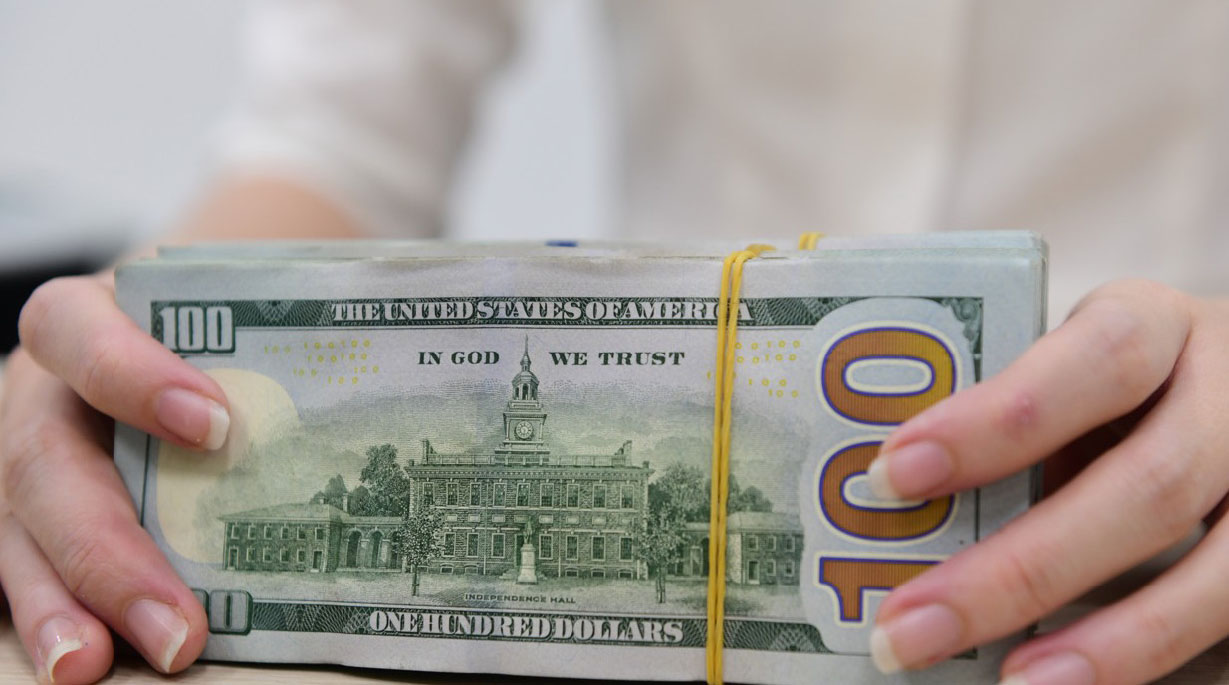
While the U.S. dollar/Vietnam dong exchange rate currently fluctuates around VND26,200 due to global risk aversion, UOB analysts expect the Vietnam dong to stabilize in the medium term, supported by strong FDI inflows and the potential upgrade of Vietnam’s stock market to emerging market status. The pair is forecasted to retreat toward 26,100 by year-end.







