HCMC – As Vietnam ramps up urban expansion and major transport infrastructure projects, the country’s real estate market is undergoing a profound shift, with growth increasingly driven by connectivity, integrated urban planning and long-term asset value.
Under the comprehensive plan for urban and rural systems for the 2021-2030 period, Vietnam’s urbanization rate is projected to exceed 50% by 2030, with urban economies expected to contribute around 85% of the nation’s GDP.
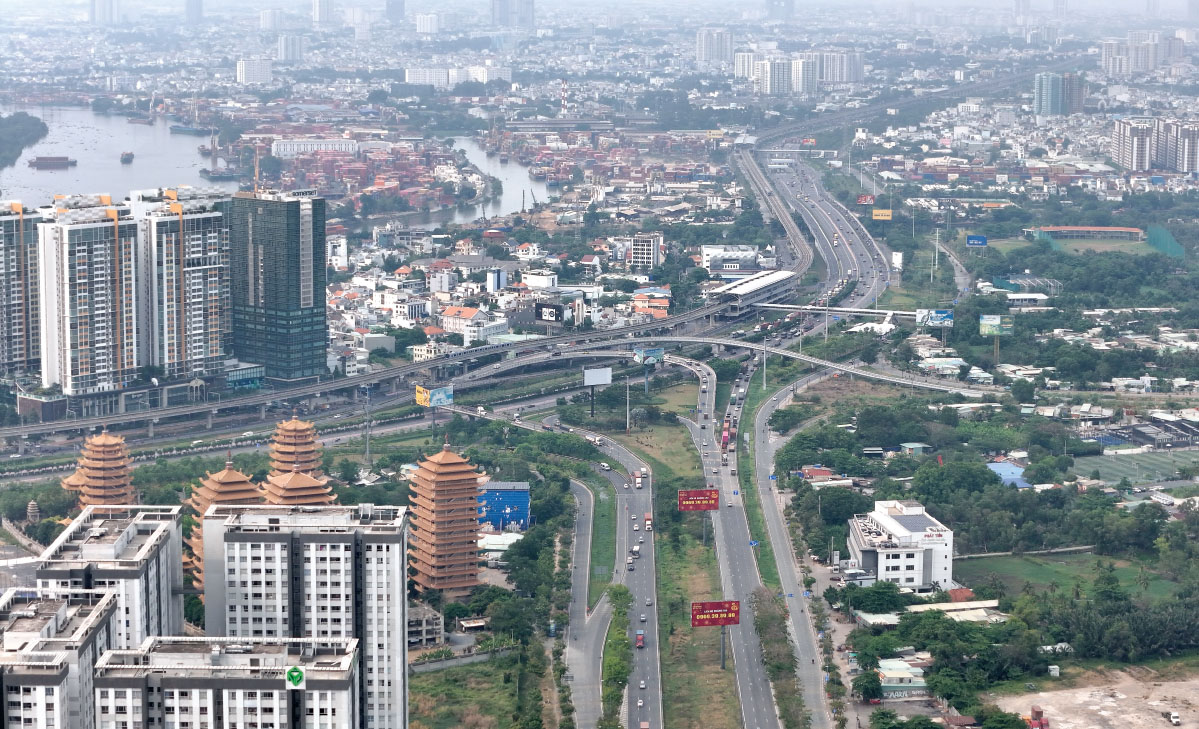
New expressways, high-speed railways, metro systems and modern airports are not only shortening travel times but also reshaping living spaces and redefining the real estate market. The sector is entering a new phase of multi-layered growth, where each segment moves at its own pace, increasingly tied to sustainable capital flows and intrinsic value.
A report titled Built Over Time: Vietnam’s Urban Transformation 2015-2035, released in March 2026 by Cushman & Wakefield, said the next growth cycle of Vietnam’s property market through 2030 and beyond will be driven by greater legal transparency, strategic infrastructure development and the country’s ambition to become Southeast Asia’s third largest economy before 2030 and a high-income nation by 2045.
Public investment reshapes urban landscape
A major catalyst for Vietnam’s next real estate growth cycle is the Government’s 2026-2030 medium-term public investment plan, which is expected to mobilize around VND8.22 quadrillion, nearly 2.7 times the amount allocated in the previous five year period. Most of the capital will be allocated to strategic traffic infrastructure, urban development, energy projects and initiatives aimed at creating new interregional growth hubs.
Alongside a series of infrastructure projects entering the final stages of development, this new public investment cycle is expected not only to expand infrastructure capacity but also to reshape Vietnam’s urban structure.
As Vietnam accelerates major infrastructure projects, including the North-South Expressway, Beltways 3 and 4 around Hanoi and HCMC, Long Thanh International Airport and future metro and high-speed rail systems, urban growth is increasingly shifting toward the Transit Oriented Development (TOD) model. Areas on the outskirts of Hanoi and HCMC are rapidly transforming into satellite urban hubs, attracting new residents, businesses and investment capital.
“Urban planning case studies show that successful urbanization goes far beyond expanding housing supply,” said Ngoc Le, senior director of strategic consulting at Cushman & Wakefield Vietnam. “The foundation of sustainable urban growth lies in developing an integrated urban ecosystem where infrastructure, employment, education, healthcare, public services and living standards advance together,” she added.
According to Cushman & Wakefield, urban planning and infrastructure development must advance in parallel with Vietnam’s economic transformation. As the country moves toward a more complex and higher value-added economy, cities can no longer continue expanding in a fragmented manner.
Instead, urban planning should support the development of integrated urban areas with stronger infrastructure connectivity, concentrated employment hubs, and more developed education and healthcare ecosystems, while also creating a higher quality living environment.
Fresh capital inflows bolster property market outlook
Vietnam recorded more than US$15.2 billion in foreign direct investment in the first quarter of 2026, marking a 42.9% increase against the same period last year.
Manufacturing and processing industries remained the main destination for foreign capital, accounting for over 60% of newly registered investment. Strong inflows were also seen in energy, logistics and real estate, with the property sector attracting roughly US$681 million during the first quarter alone.
A growing number of large scale investment commitments worth tens of billions of U.S. dollars are being directed toward transport infrastructure, data centers, financial technology and green real estate projects.
At the same time, the expansion of public-private partnership (PPP) investment models is helping mobilize additional private capital, creating spillover effects from infrastructure development to related real estate segments.
In parallel, the establishment of the Vietnam International Financial Center (VIFC) with dual hubs in HCMC and Danang is expected to attract greater inflows from global investors. “This will become a new capital channel for the economy, making it easier for businesses, including small and medium sized enterprises, to access international funding,” said Associate Professor Dr Nguyen Huu Huan, vice chairman of the VIFC-HCMC executive council. “The VIFC is expected to serve as a regional and global capital gateway and financial transit hub in the years ahead.”
Huan noted that HCMC has strong potential to develop maritime finance services thanks to strategic infrastructure advantages, including the Cai Mep-Thi Vai port cluster, Tan Cang port and the proposed Can Gio port project. Cargo flows moving through these gateways are estimated at around US$1 trillion annually. These advantages could help Vietnam gradually reduce its dependence on financial and international payment hubs such as Singapore and Hong Kong. The VIFC is expected to address longstanding bottlenecks, namely regulatory constraints and limited capital mobility.
These high-quality capital inflows are expected to generate more sustainable economic growth, with strong spillover effects on employment, workforce development and urbanization.
At the same time, sweeping changes in infrastructure and urban planning, combined with rising investment inflows, are becoming key drivers behind the transformation of Vietnam’s real estate market.
The market is also entering a period of deeper consolidation following amendments to the Land Law, Housing Law and Real Estate Business Law in 2024, especially as interest rates have moved away from historically low levels since the beginning of 2026.
Only projects with transparent legal frameworks, strong connectivity to infrastructure networks, compliance with ESG standards and the ability to generate long-term value are expected to attract sustainable capital and remain competitive in the next phase of the market, a period with far less room for short-term speculation.
“Vietnam remains one of the region’s most attractive long-term growth markets because the country’s story is no longer just about the pace of expansion, but the quality of that expansion,” said Anshul Jain, chief executive for India, Southeast Asia, the Middle East and Africa at Cushman & Wakefield.
“Urban planning, infrastructure investment and economic strategy need to be more closely aligned to create highly competitive cities and build a stronger foundation for long-term real estate growth,” he added.
To provide deeper insights into the trends shaping the real estate market, The Saigon Times Group will host the Real Estate Forum 2026 under the theme “Layered Growth: Infrastructure cycles and new capital flows.” The event is scheduled to take place at 8:30 a.m. on May 21, 2026, at GEM Center (8 Nguyen Binh Khiem Street, Sai Gon Ward, HCMC), with participation from policymakers, economic and banking experts, investment funds, and businesses operating in the real estate, industrial and logistics sectors. It will focus on two main topics: the 2026-2030 infrastructure investment cycle and the emergence of new urban growth poles, as well as shifting capital flows within the economy and their impact on real estate through logistics, technology and innovation.
Interested participants may register for the event here or contact Ms. Thu Tra at 093 2571301 or via email at thutra@thesaigontimes.vn.