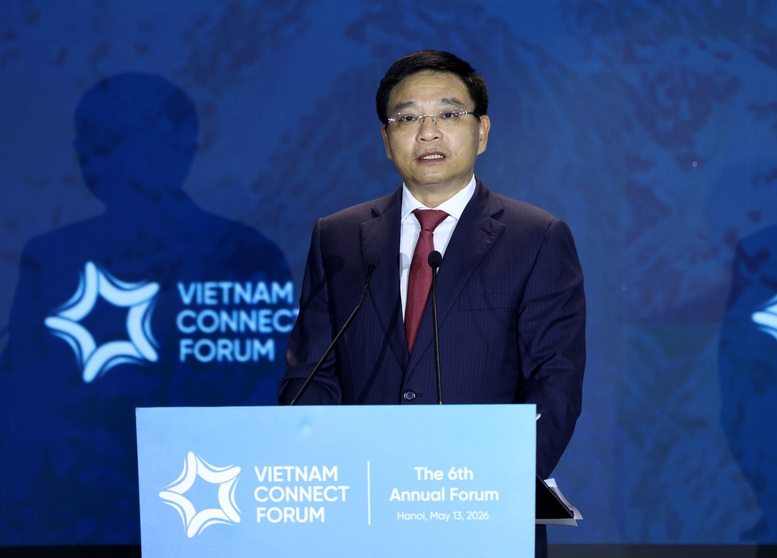
HCMC – Vietnam will shift from mass foreign direct investment (FDI) attraction to a more selective approach focused on high technology, innovation and stronger links with domestic firms, Deputy Prime Minister Nguyen Van Thang said.
Speaking at the Vietnam Connect Forum 2026 on May 13, the deputy prime minister emphasized that new-generation FDI should go beyond manufacturing and market expansion to help Vietnam create greater value, build new capabilities and strengthen its position in global supply chains.
Government leaders noted that competition for international investment attraction is changing rapidly. While low-cost labor and investment incentives were once the key advantages, investors are now paying greater attention to institutional quality, policy stability, strategic infrastructure, green energy, data infrastructure, and a highly skilled workforce.
This presents both a challenge and an opportunity for Vietnam to reposition its role in global value chains while renewing growth drivers based on science and technology, innovation, digital transformation, and green transition, Thang said.
Vietnam currently has more than 46,500 valid FDI projects with total registered capital exceeding US$543 billion, while cumulative disbursed capital has reached around US$357.6 billion. The FDI sector contributes more than 20% of GDP, accounts for around 70% of export turnover, and creates jobs for millions of workers.
Amid declining global FDI flows in many regions, Vietnam has maintained its position among ASEAN’s leading FDI destinations. Many international corporations have expanded investments in electronics, semiconductors, high technology, logistics, energy, and innovation in Vietnam.
However, linkages between the FDI sector and domestic enterprises have yet to meet expectations. Localization rates in many industries remain low, while most Vietnamese enterprises are still participating mainly in low value-added segments of supply chains.
To attract new-generation FDI, the Government will focus on five major directions: improving institutions and the investment environment, selectively attracting FDI, developing domestic enterprises and supporting industries, investing in strategic infrastructure and high-quality human resources, and enhancing state management efficiency over the FDI sector.
Vietnam will prioritize attracting projects in semiconductors, artificial intelligence, data, biotechnology, pharmaceuticals, clean energy, new materials, modern logistics, and financial services.
“We are not only concerned about how much capital investors bring into Vietnam, but also what technologies they bring, how much added value they create, and how many Vietnamese enterprises they can connect to global supply chains,” the deputy prime minister said.