
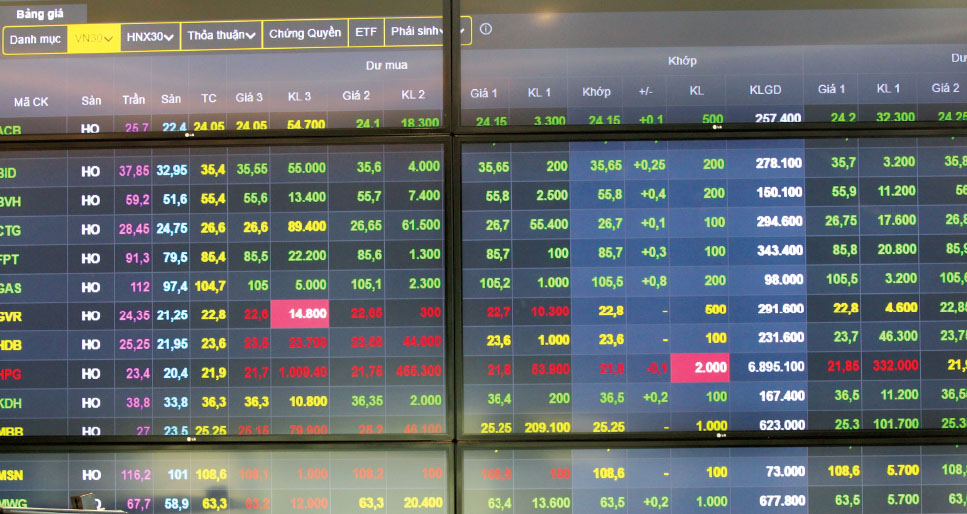
HCMC – More than 70% of stocks on Vietnam’s market are trading at price-to-earnings ratios below 10 times, a valuation level typically seen during periods of crisis, according to investment firm VinaCapital.
Michael Kokalari, chief economist and director of Macroeconomic Analysis and Market Research at VinaCapital, said many stocks are being valued as if the economy were in crisis despite stronger growth prospects.
The low valuations contrast with shares linked to the Vingroup ecosystem, which account for nearly 30% of the VN-Index’s market capitalization.
Kokalari attributed pressure on the market to both global and domestic factors. He pointed to disruptions to shipping through the Strait of Hormuz, which have weighed on investor sentiment.
Domestic challenges include a widening trade deficit, which rose from 3% of GDP before the conflict to more than 6% of GDP by mid-May, and inflation above 5%, which has increased pressure on interest rates.
Foreign investors have also continued to withdraw funds from the market. Net foreign selling of Vietnamese stocks reached about US$2 billion so far this year, following net sales of US$5 billion in 2025.
Kokalari noted that the stock market has yet to fully reflect the impact of government reforms aimed at improving the performance of state-owned enterprises, meeting criteria for inclusion in FTSE emerging market indexes, and restarting stalled real estate projects.
Despite weak valuations, corporate earnings remained strong. According to VinaCapital, after-tax profits of listed companies rose 51% from a year earlier in the first quarter, far above the market consensus forecast of 15%.
Part of the increase came from Vinhomes, a member of the Vingroup JSC. Excluding Vinhomes, earnings still grew 30%, supported by gains across real estate, building materials, retail, energy and consumer staples companies.
VinaCapital expects profit growth for companies in the VN-Index to slow as the economic effects of the Middle East conflict spread and higher interest rates weigh on banks’ profit margins during the rest of the year.
Kokalari said risks tied to the conflict involving the United States and Iran remain. However, much of the market continues to trade at valuations comparable to crisis periods even though many companies maintain solid fundamentals.