
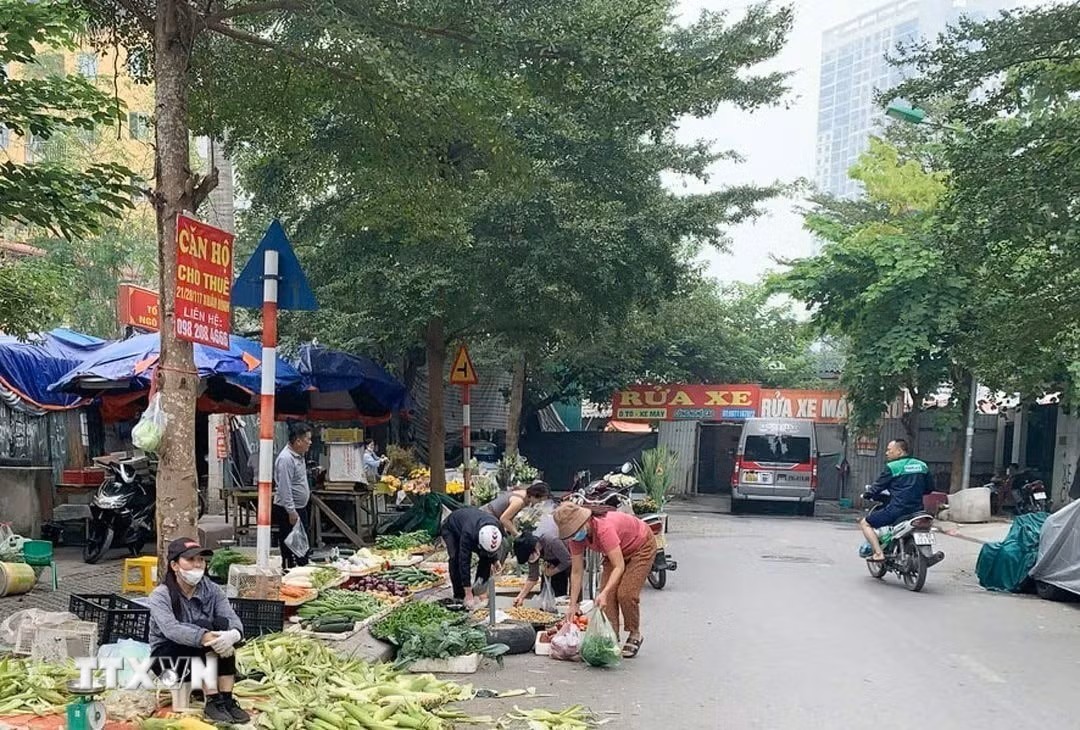
HCMC – Hanoi City plans to build or rebuild 108 wet markets and eliminate all makeshift wet markets by 2030, under a city plan for 2026–2030.
The plan, issued on March 20 by the People’s Committee of Hanoi City, sets targets to expand and upgrade the city’s market system. It covers the construction or reconstruction of 108 wet markets, including two wholesale markets, and the renovation of 118 others.
Authorities aim to remove all spontaneous trading spots and unregulated market areas across the city.
The plan seeks to improve state management and address deteriorating infrastructure while meeting requirements on food safety, environmental hygiene, fire prevention, and public order.
Resources will be mobilized to develop a more balanced market network between urban and rural areas, including remote locations. The goal is to support goods circulation, daily consumption, and stable budget revenues.
By 2030, all markets are expected to operate under approved pricing schemes for selling space, internal regulations, and organized product zoning. All upgraded or newly built markets must meet standards on safety, hygiene, and commercial practices.
The plan also sets digital targets. All traders, including mobile vendors, are expected to adopt QR code payments. Market operators must disclose monthly rates of cashless transactions. Half of fixed traders are expected to run online storefronts on e-commerce platforms, social media, or other digital channels.
Local authorities are tasked with reviewing land for planned market projects and clearing illegal trading sites. They are also required to strengthen public communication before and during implementation.
The city will allocate annual budget funds to build, upgrade, and expand markets, prioritizing those that fail to meet safety and hygiene standards.
A separate program will be implemented to manage food businesses in markets. It covers training, certification, and the promotion of safe food products, along with inspections and equipment requirements.
Waste collection systems will be improved, with a focus on sorting at source and reducing plastic waste.