
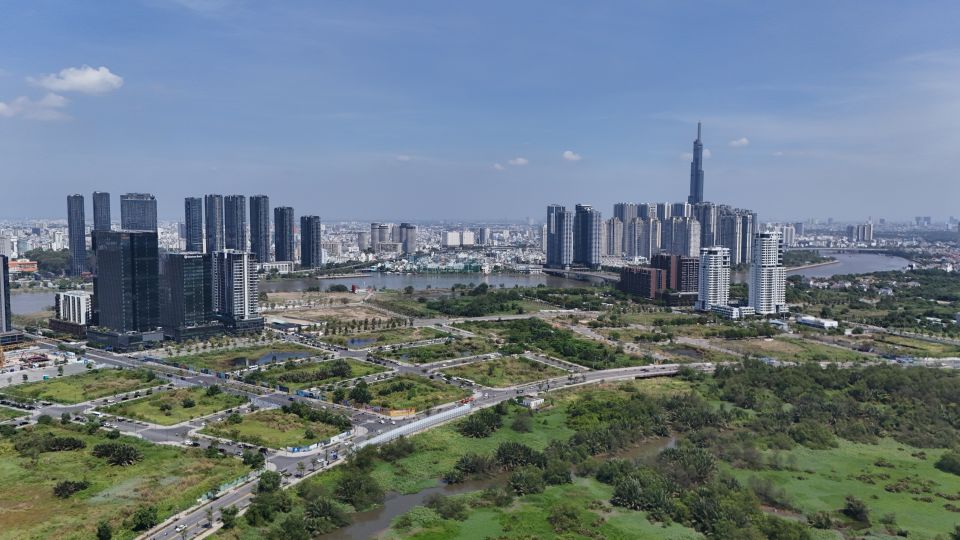
HCMC – Ho Chi Minh City authorities have decided to remove 259 land plots totaling more than 2,000 hectares from the list of sites proposed for pilot commercial housing development projects.
According to a list released by the city’s Department of Agriculture and Environment, all the 259 sites failed to meet the technical and legal requirements for inclusion under National Assembly Resolution No. 171/2024/QH15, which is intended to unlock land resources for housing development.
The main reasons include inconsistencies with approved master planning, incomplete land legal documentation, unresolved issues related to land origin and land-use conversion, outstanding financial obligations, or a lack of alignment with the city’s housing development strategy.
Among the excluded projects are several large-scale sites spanning dozens or even hundreds of hectares. These include a more than 270-hectare project in An Thoi Dong Commune, which lacks a detailed 1:2,000 zoning plan, and the nearly 97-hectare Saigon River eco-urban and tourism project in An Nhon Tay Commune, which authorities said lacked sufficient grounds to assess planning compatibility.
Under the resolution, real estate developers are allowed to negotiate land-use rights transfers or use existing land they hold, including agricultural and non-agricultural land, to develop commercial housing projects, instead of being required to hold 100% residential land as under previous regulations.
Earlier in April, the department had also removed another 33 land plots totaling more than 489 hectares after determining that they failed to meet eligibility requirements.
Authorities said the stricter screening process is intended to preserve planning discipline and prevent developers from using the pilot mechanisms to legitimize problem land holdings or accumulate land for speculative land-use conversion.
Previously, commercial housing projects could only be developed on legally recognized residential land or mixed-use plots containing residential land, leaving many sites unable to proceed despite being located within urban development plans because developers could not secure residential land-use rights.
Resolution 171 was introduced to address this bottleneck by allowing suitable agricultural and non-agricultural land reserves to be converted for commercial housing projects in line with approved planning and housing goals.