
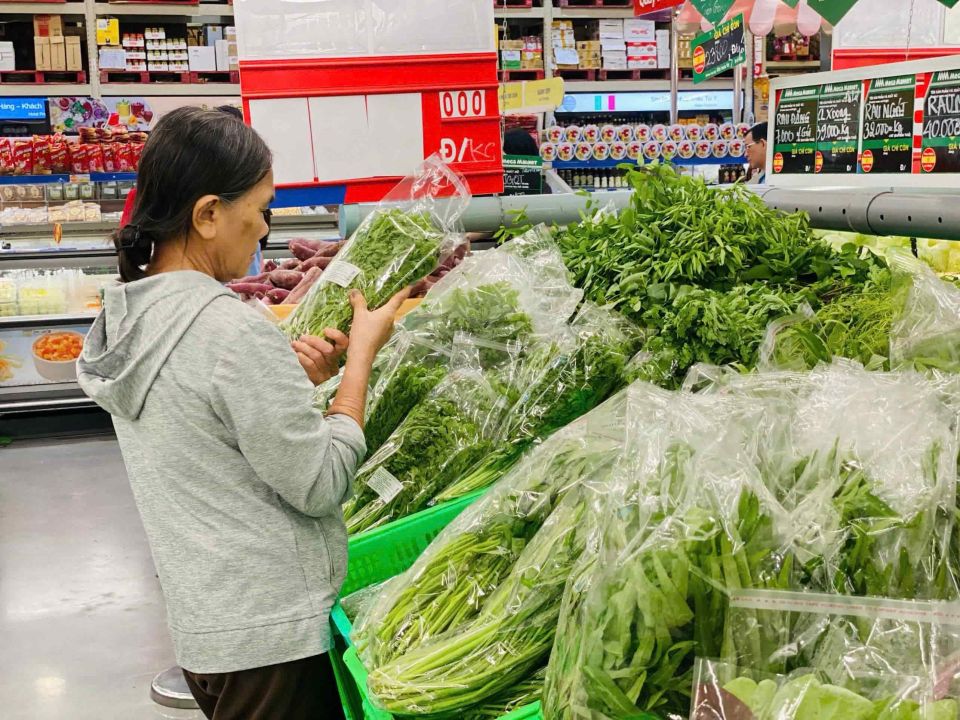
HCMC – Ho Chi Minh City is accelerating its agricultural digitalization strategy by aiming to bring 60% of its vegetable cultivation area into monitored supply chains with planting area codes and clear product traceability by 2030.
Under a plan recently issued by the HCMC government on developing concentrated safe vegetable production zones through 2030, the city will maintain 5,500 hectares of vegetable farmland, equivalent to 35,000 hectares of cultivated area based on crop rotation, with expected output reaching around 880,000 tons annually.
A key focus of the plan is the transition toward high-tech agriculture, with 12,000 hectares of cultivation area expected to adopt advanced technologies. The city aims to raise average production value to VND800 million or VND1 billion per hectare per year, while increasing the share of high-tech vegetable products to 60-70% of the sector’s total value.
In terms of production planning, concentrated vegetable farming zones applying VietGAP, GlobalGAP and organic standards will continue to be developed in regions such as Cu Chi, Hoc Mon and Binh Chanh as well as areas in former Binh Duong and Ba Ria-Vung Tau provinces.
Alongside commonly cultivated vegetables, HCMC will prioritize preserving and developing local specialty products with strong economic value, including water spinach, water mimosa, taro and bamboo shoots. To achieve the target of ensuring all vegetable samples meet food safety standards and establishing 10-15 sustainable safe food supply chains, the city plans to implement a series of science, technology and management solutions.
Authorities will promote the application of the Internet of Things (IoT) and artificial intelligence (AI) in managing greenhouses and net houses, while supporting businesses and cooperatives in building quality management systems that comply with HACCP, ISO and GMP standards. At the same time, HCMC will strengthen linkages between farmers, food processors and modern distribution channels to reduce intermediary stages and tighten control over agricultural inputs.
On the market side, the city will support brand development and geographical indications associated with the OCOP program, while tightening the management and issuance of planting area codes to meet export requirements in major markets such as the U.S., Japan, the EU and China.