HCMC – A wave of large-scale infrastructure investment is ushering in a new cycle of urban restructuring for HCMC and the nation’s southeast region. However, experts say infrastructure is only the starting point. The long-term success of new growth hubs will ultimately depend on employment opportunities, quality of life, and the ability to retain residents over time.
As metro lines, beltways, expressways, airports, and seaports are being simultaneously developed during the 2026-2030 period, the urban development story of HCMC is entering a new phase. The focus is no longer on the expansion of existing urban areas, but on building a multi-center urban structure linked to public transportation, logistics, industry, and livability.
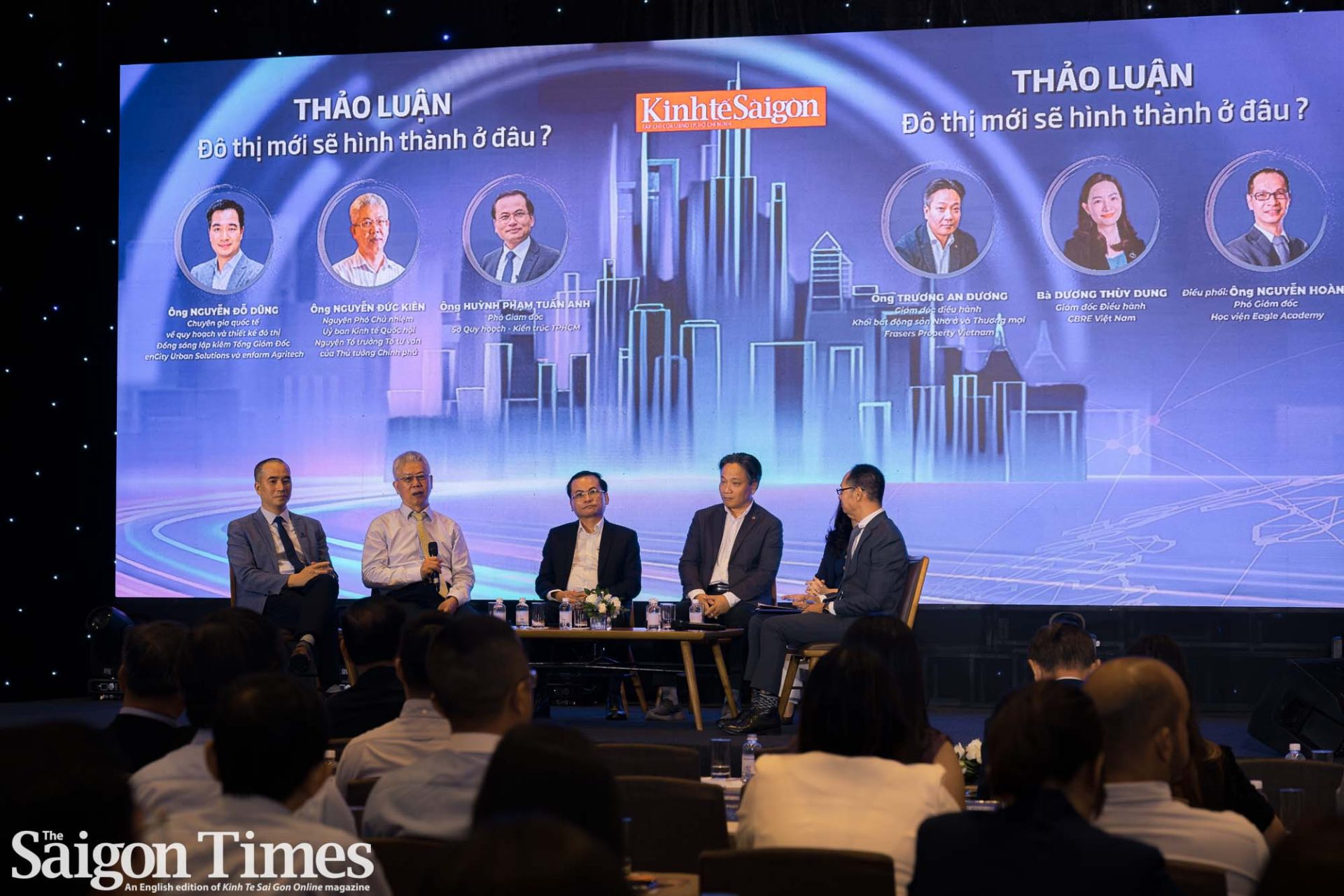
That was the shared view among panelists at the discussion session “Where will new urban areas emerge?”, moderated by Nguyen Hoang, deputy director of Eagle Academy. The panelists were Nguyen Duc Kien, former vice chairman of the National Assembly’s Economic Committee; Huynh Pham Tuan Anh, deputy director of the HCMC Department of Planning and Architecture; Nguyen Do Dung, an international expert in urban planning and urban design; Truong An Duong, general manager of Residential & Commercial at Frasers Property Vietnam; and Duong Thuy Dung, executive director of CBRE Vietnam.
The panel discussion was the first of the two that took place at the Real Estate Forum 2026, which was organized by the Saigon Times Group at GEM Center in HCMC on May 21 under the theme “Layered Growth: Infrastructure Cycles and New Capital Flows.”
Opening the session, Nguyen Hoang of Eagle Academy said current infrastructure projects are no longer designed solely to serve HCMC, but are expanding connectivity across the wider region surrounding the city. He said around VND8.22 quadrillion would be needed for public investment projects, especially infrastructure, in the country in 2026-2030 as projected by the Government and raised the question of what is driving the National Assembly and the Government’s strong determination to push forward a new phase of transport infrastructure investment.
According to Nguyen Duc Kien, former vice chairman of the National Assembly’s Economic Committee, the foundation of today’s policy decisions stems from both the achievements and limitations of HCMC’s previous urban development process.
He pointed to milestones such as the relocation of Saigon Port to restructure urban space, the development of the southern urban area, the construction of the Saigon River Tunnel, and the rehabilitation of the Nhieu Loc – Thi Nghe Canal. In his view, special mechanisms such as Resolution 54 and Resolution 98 on special mechanisms and policies for HCMC are giving the city greater autonomy in infrastructure investment and urban expansion.
“We are giving the city the authority to decide its own development direction. Transport infrastructure and real estate will follow new economic corridors, creating new growth drivers for the city,” Kien said.
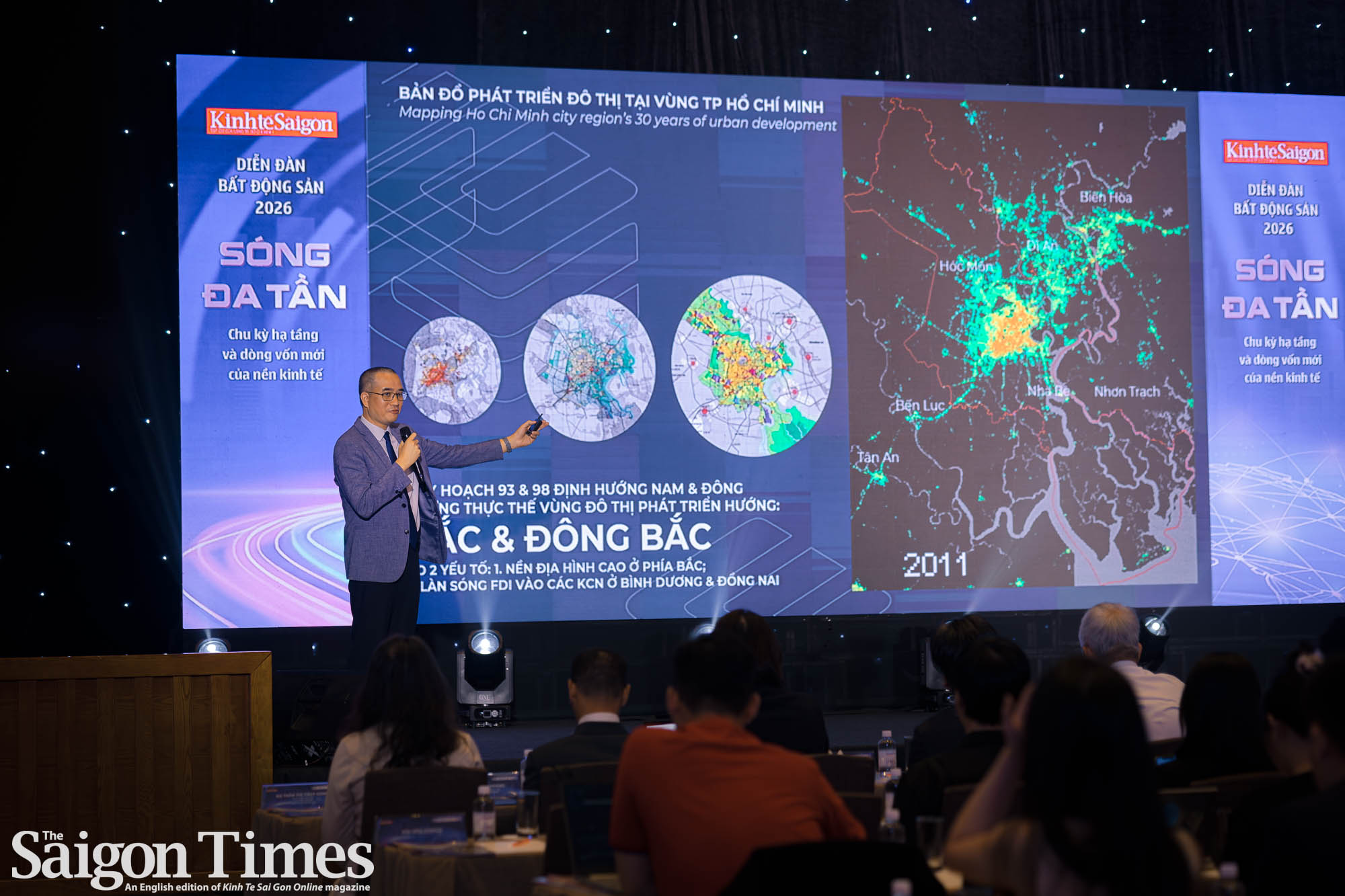
From an urban planning perspective, Nguyen Do Dung, an international expert in urban planning and urban design, said public transportation, especially a metro network, will fundamentally reshape urban development.
According to him, the ability of cities to expand has always been closely tied to modes of transportation. In the walking era, urban areas were developed within a radius of roughly one kilometer. Bicycles and trams expanded that to around five kilometers, while automobiles stretched cities to about 10 kilometers.
“When metro systems are in place, areas once considered far from downtown will become much more accessible, creating opportunities for entirely new urban zones to emerge,” Dung said.
Meanwhile, Huynh Pham Tuan Anh of the HCMC Department of Planning and Architecture said expanding regional connectivity with former Binh Duong and Ba Ria-Vung Tau provinces is creating a chance to restructure development space in a more integrated and complete way.
According to him, each locality previously developed based on its own strengths: the former HCMC area specialized in finance and services, the former Binh Duong Province focused on industry, while the former Ba Ria – Vung Tau Province leveraged its advantages in ports and tourism. After they were merged into a unified whole, the new metropolitan region would form a more complete ecosystem spanning industry, logistics, and services.
“When integrated into one unified entity, this will create a comprehensive picture that includes industry, services, and logistics,” Anh said.
He added that the city is currently studying new metro lines, freight railways, and connections to Long Thanh International Airport in neighboring Dong Nai City, while also mobilizing private investment for infrastructure development.
“It is not only about investing in roads or metro lines, but also about investing in the entire urban ecosystem that comes with them,” Anh emphasized.
New urban areas cannot simply be places to live
While all the experts agreed that infrastructure will open up new development space, they also stressed that the success of future urban areas will depend on whether they can create real vitality for residents.
Nguyen Do Dung pointed to the reality that many satellite urban areas in the past “sold out homes but residents never moved in.” According to him, the issue goes beyond geographical distance and comes down to commuting time, employment opportunities, and the quality of social amenities.
“People may buy homes, but they still will not move there if commuting to work, school, or essential services is too difficult,” he said.
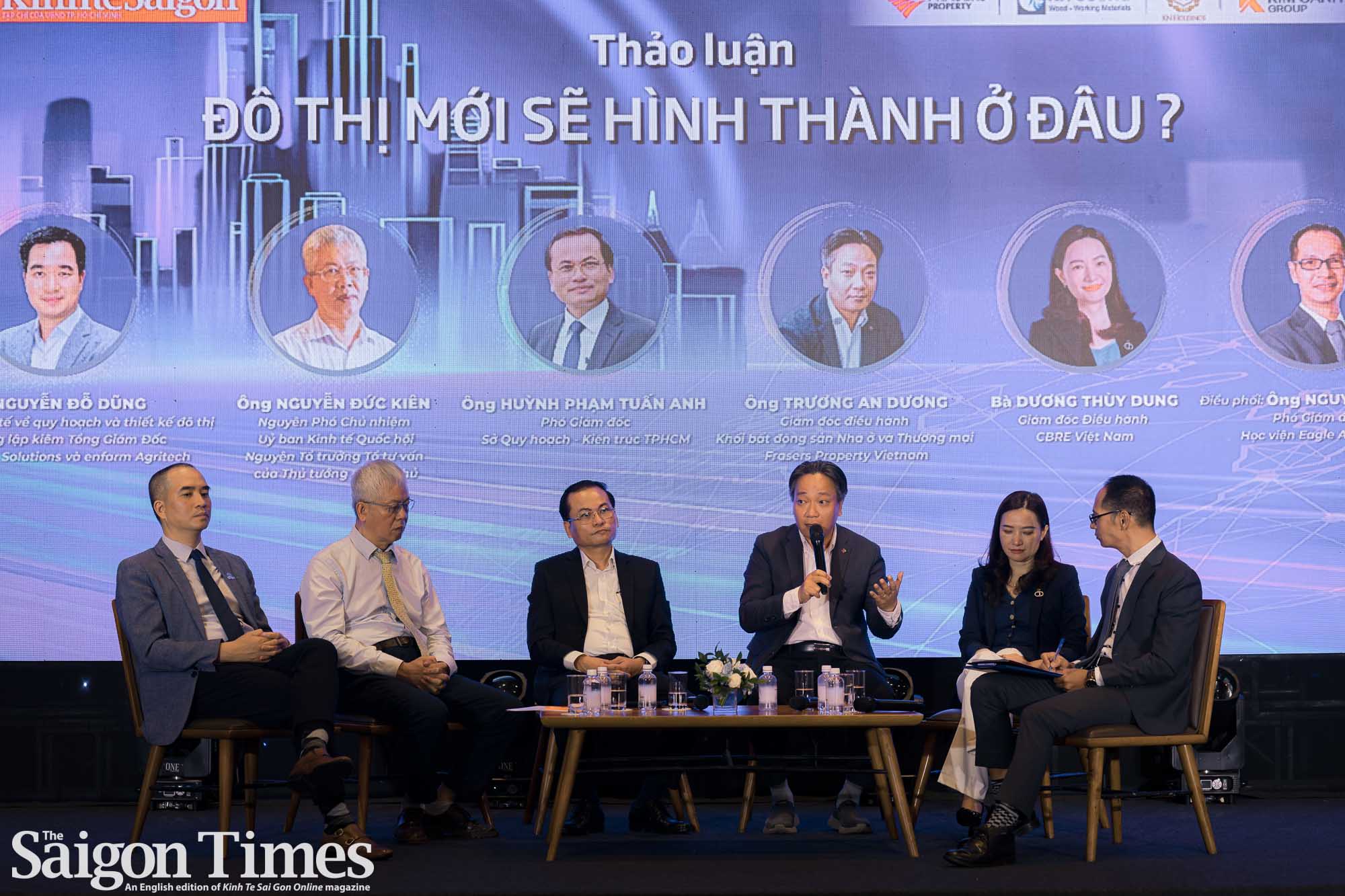
According to Dung, residents generally only accept commuting times of around 30 minutes each way. As a result, new urban areas need to follow integrated development models that balance housing, employment, education, healthcare, and living space.
“There needs to be a balance between housing and jobs. Urban planning cannot focus solely on housing while neglecting space for businesses and the service economy,” he said.
This view was echoed by Duong Thuy Dung of CBRE Vietnam. She said the current urbanization process is shifting from a concentrated urban model to satellite cities, but new urban areas cannot function solely as residential zones.
“A sustainable urban area must be able to sustain itself,” she stressed.
According to Duong Thuy Dung, the two most important factors in attracting residents to genuinely settle in new urban areas are healthcare and education. At the same time, urban areas must create jobs and provide a complete ecosystem of social amenities so residents can work, study, access healthcare, and carry out daily activities locally.
From the business perspective, Truong An Duong of Frasers Property Vietnam said the real estate market is coming under growing pressure to rethink urban development models. According to him, many developers still measure project success based on sales speed or selling prices, while the more important factor is long-term quality of life.
“Success is not just about selling quickly or achieving high prices, but whether residents are truly happy living there five to 10 years later,” he said.
He added that Frasers Property Vietnam is prioritizing public spaces, amenities that support real daily needs, and stronger community connections, rather than focusing solely on housing products. “Human connection is the most important element of any urban area,” he added.
According to Duong, even when developers want to reduce construction density to improve living quality, they often find it tough because they must comply with previously approved planning frameworks.
A new urban cycle measured by quality of life
One notable point throughout the discussion was the consensus that the next urban development cycle of HCMC will no longer be measured by land area or the number of real estate projects, but by the actual quality of life.
According to Huynh Pham Tuan Anh of the HCMC Department of Planning and Architecture, each urban area in the coming years will need to clearly define its own role — whether in industry, finance, logistics, tourism, or services — in order to build an appropriate social infrastructure around it.
He said the new development mindset no longer measures distance in kilometers, but in commuting time. This will require the city to improve public transport capacity and reduce dependence on private vehicles.
Meanwhile, Nguyen Duc Kien said future urban planning must move away from the “home ownership” mindset toward a broader focus on quality of life.
“Putting people at the center means having hospitals, schools, parks, housing prices aligned with incomes, and real quality of life,” he emphasized.
According to Kien, rental housing could become an important direction in future policies aimed at reducing pressure on home ownership and creating more options for urban residents.
After many years of development driven by area expansion and rising housing supply, HCMC is entering a phase in which transport infrastructure becomes the backbone reshaping urban space. However, as the experts emphasized throughout the discussion, infrastructure only paves the way. The success of new urban areas will depend on their ability to generate jobs, provide public services, strengthen community connections, and deliver a quality of life strong enough to retain residents for the long term.