
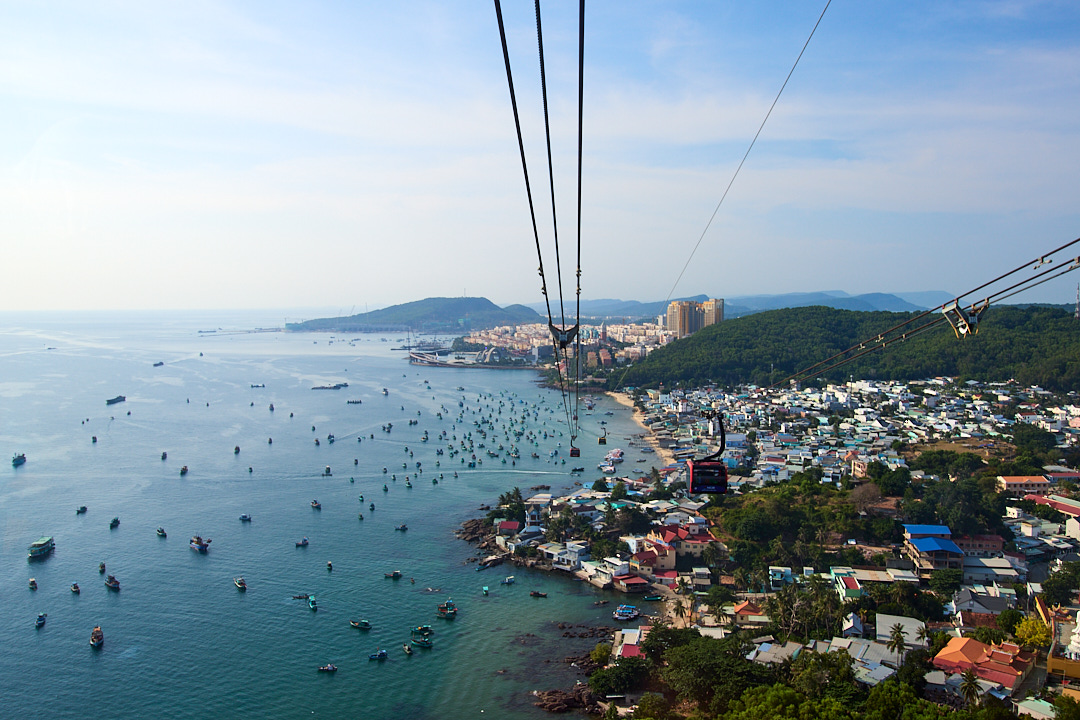
HCMC – Phu Quoc Special Zone has accounted for more than 81% of An Giang Province’s tourism revenue so far this year, while attracting nearly all international visitors to the province.
Tourism revenue in An Giang has reached an estimated VND33.17 trillion in January-May, up 37.2% from a year earlier. The province has welcomed more than 13.3 million visitors, up 12.1%, while international arrivals have grown 48.4% to around 1.18 million, reported the Vietnam News Agency.
Phu Quoc has received an estimated 4.77 million visitors since early this year, up 34.2% year-on-year and equivalent to 56.1% of its annual target.
International arrivals to the island city total about 1.17 million, up 51% from a year earlier. Tourism revenue is up 50.4% to VND26.96 trillion.
In May alone, An Giang has welcomed an estimated 2.49 million visitors, up 4.3% year-on-year. International arrivals have increased 5.9% to around 166,000. Tourism revenue has expanded 2.9% to VND5.28 trillion.
Phu Quoc account for nearly 897,000 visitors in May, up 19.4% from a year earlier. International arrivals exceed 165,000, while tourism revenue totals VND4.14 trillion, up 12%.
Alongside tourism growth, An Giang has been developing policies and plans related to tourism and external relations.
The province has submitted a proposal to the prime minister, seeking approval to develop Phu Quoc into a high-quality eco-tourism and marine tourism center serving domestic and international markets.
Authorities are also preparing tourism development plans for 2025-2030 with a vision to 2035. The plans cover tourism management, investment support policies, tourism resource surveys, digital transformation, promotion activities, and international cooperation, along with preparations for APEC 2027.
Under An Giang’s 2021-2030 provincial plan with a vision to 2050, the province identified four economic corridors tied to border trade, coastal development, logistics, tourism, urban areas, and processing industries.
The province plans to divide development into five sub-regions. The eastern area centered on Long Xuyen is expected to focus on high-tech agriculture, biotechnology, and agricultural processing.
The northern area, covering Chau Doc, Cam Mountain, and Tra Su cajuput forest, is planned as a hub for eco-tourism, spiritual tourism, healthcare services, and border-gate economic activities.
The western area linked to Ha Tien is expected to develop the marine economy, renewable energy, cross-border trade, and international logistics. The remaining sub-regions cover the southern area and island groups such as Phu Quoc, Tho Chau, and Kien Hai.