
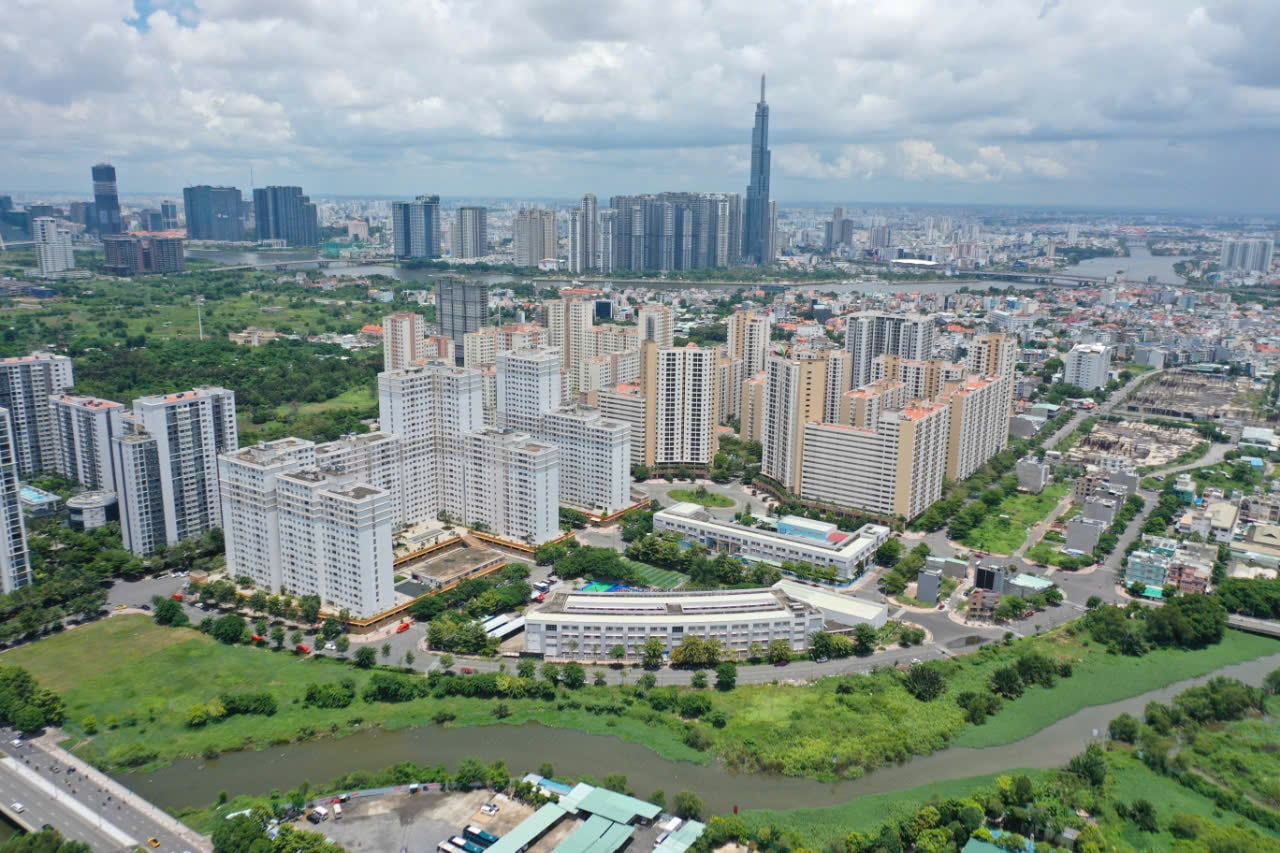
HCMC – Many real estate investors are cutting prices and accepting losses to exit the market as liquidity declines and interest rates rise, the Vietnam Association of Realtors (VARS) reported.
VARS said the pressure is most acute among investors using financial leverage, as slower transactions and rising inventories force sales.
Since late 2025, housing supply has increased sharply after legal issues were resolved and stalled projects resumed, alongside new launches mainly in suburban areas linked to infrastructure.
Total supply in 2026 is estimated at about 200,000 units, including new projects, unsold inventory and resale properties. Supply quality has also improved with more integrated urban developments.
Higher supply has expanded options for buyers across segments and locations. Flexible payment schemes and interest rate support allow buyers to enter the market with initial capital of 10% to 30%.
However, rising interest rates have made buyers more cautious. Transactions have slowed and become more selective, focusing on projects with clear legal status, good locations and reasonable prices.
The slowdown has increased pressure on investors to sell. The trend is more visible in areas that previously saw rapid price gains, where prices have stabilized or declined slightly.
VARS noted a widening gap in price expectations. Sellers continue to hold prices, while buyers wait for further declines or seek discounted properties.
Investor groups are diverging. Long-term investors with stable cash flows face less pressure, while those who bought at peak prices or used high leverage account for most selling activity.
Despite weaker liquidity, prices have not dropped sharply due to rising input costs. Land accounts for 30% to 40% of total development costs and continues to increase under updated pricing frameworks.
A 20% increase in land prices can raise total project costs by at least 6% to 8%, especially for projects subject to higher land-use fee adjustments. Some delayed projects face land costs up to three times higher.
Construction costs have risen by 8% to 12%, while interest rates have increased by about 2 percentage points, adding further pressure on developers’ costs.
Developers have instead offered incentives such as interest subsidies, extended payment schedules and discounts to support sales, as cutting prices remains difficult.
With supply expanding, the market is shifting toward buyers. VARS advised investors to focus on cash flow potential, limit borrowing and plan holding periods of three to five years.
Projects in areas with established or emerging residential communities, especially near industrial zones, are expected to remain more liquid, while less populated areas carry higher risks.