
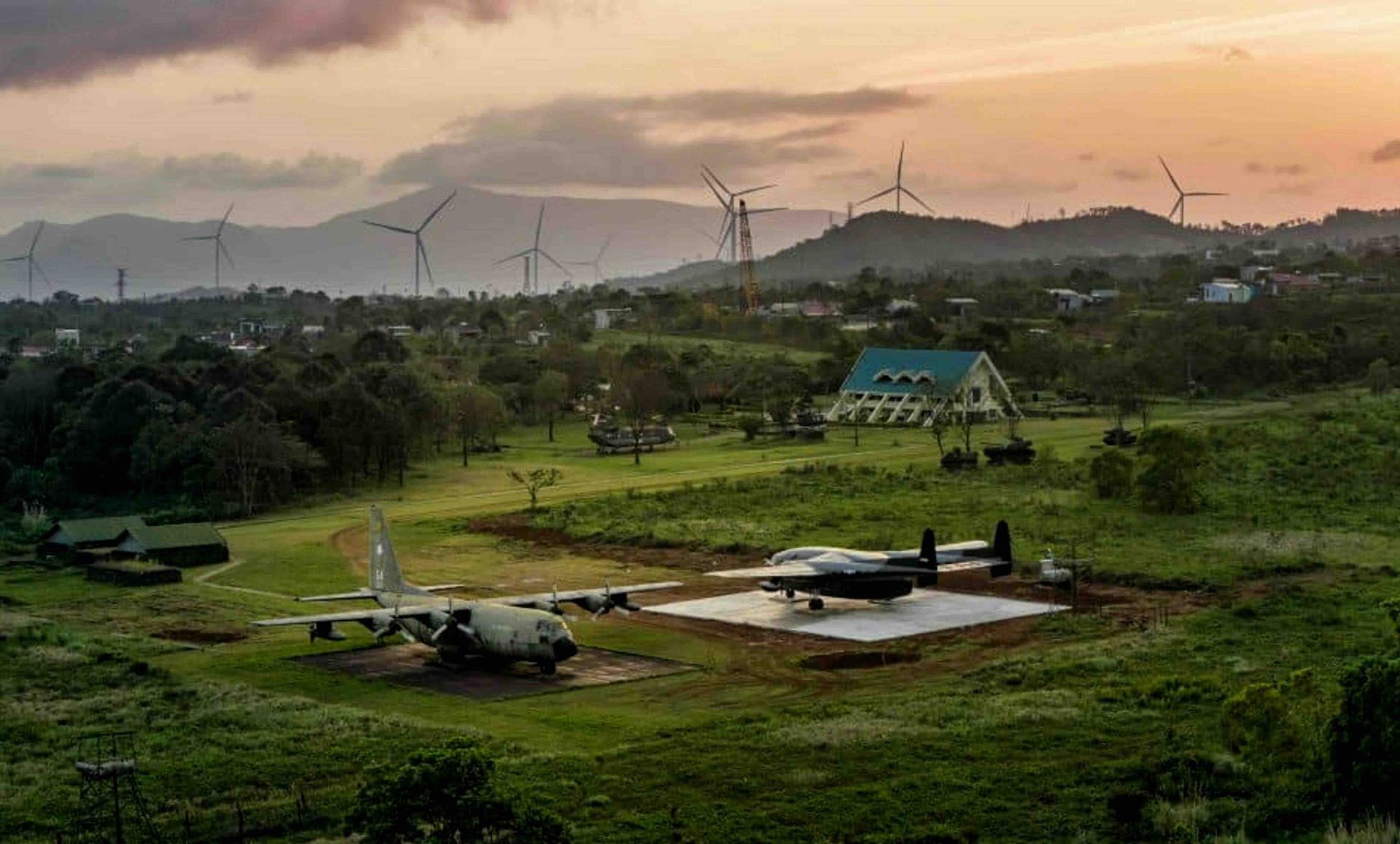
There was a time when this outpost was called an “impregnable fortress” on the northern edge of South Vietnam’s battlefield. Yet even fortresses fall. Today, decades after the guns fell silent, Ta Con Airport has become an open-air museum – a place where history rests quietly beneath the green folds of the Truong Son mountains.
On summer afternoons, sunlight drifts across the Ta Con valley in Khe Sanh, Quang Tri Province – one of Vietnam’s most storied former battlefields. Wild grass sways around aging aircraft, rusted shells and weathered fortifications. Visitors come not simply to see relics, but to understand a landscape that shaped one of the defining chapters of modern Vietnamese history.
Built by U.S. forces between 1966 and 1968, Ta Con served as the strategic center of the Khe Sanh combat base complex. Positioned near the Vietnam–Laos border along National Highway 9, it functioned as a logistics hub and air bridge capable of receiving heavy transport aircraft. The base also formed part of the McNamara electronic barrier system, designed to monitor movement along the Ho Chi Minh Trail.
During the 1968 Khe Sanh campaign, after months of intense fighting, U.S. forces abandoned the base, ending what had once been considered one of the strongest military positions in the region.
More than half a century later, Ta Con tells a different story.
The former airfield now stands as a national historical site and one of Quang Tri’s most distinctive destinations. Preserved aircraft, tanks, trenches and defensive works remain in place beside the Route 9–Khe Sanh Victory Museum, where photographs, maps and wartime artifacts help visitors visualize the conflict beyond the pages of history.
Yet Ta Con today is not defined by war alone. Around Khe Sanh, coffee plantations stretch across rolling hills and quiet villages. Morning mist softens the mountain ridges. By late afternoon, sunlight settles over old runways and turns the battlefield into something unexpectedly peaceful.
Ta Con does not ask visitors to relive war. It invites them to reflect on peace – and witness how landscapes, like people, learn to begin again.







