
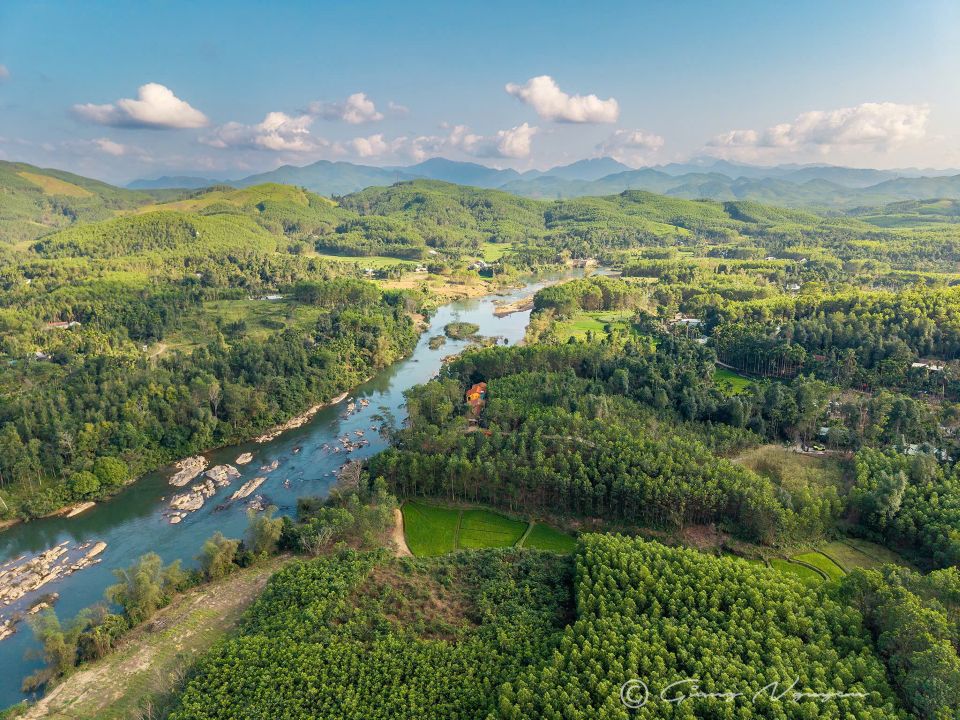
HCMC – More than 3.07 million hectares of forestland across Vietnam currently under temporary management by commune-level authorities remain without officially designated forest owners, creating a major obstacle to attracting green investment and participating in the global carbon credit market.
The area accounts for 20.5% of Vietnam’s total forest area and plays a critical role in biodiversity conservation and climate change mitigation. However, the lack of clearly defined ownership rights and responsibilities has contributed to forest degradation and limited investment in sustainable forestry.
The issue was highlighted at a workshop on improving the management and protection of forests and forestry land managed by local authorities, held in Hanoi on June 4 by the Forestry and Forest Protection Department and the Vietnam Association of Agricultural Economics and Rural Development.
A survey conducted in 13 localities found that much of the forestland under commune management consists of poor-quality or recovering forests, making it unattractive to businesses and households. At the same time, the absence of capable long-term investors has further weakened forest quality.
Experts called for accelerating the allocation of forestland to local communities, households and specialized forest management boards to break the cycle of ineffective stewardship while improving livelihoods and environmental protection.
From an economic perspective, clearly defining forest ownership is essential for turning forest resources into tradable assets in carbon markets. International investors and financial institutions typically require legal certainty and standardized forest inventory data before engaging in carbon credit transactions.
As long as these forests remain under nominal commune-level management, large companies will face difficulties entering long-term partnerships, limiting green investment flows to mountainous regions, experts said.
The challenge is compounded by limited resources at the local level. In some areas, a single official is responsible for managing vast forest areas across difficult terrain. In Nam Lau Commune in Son La Province, for example, one official oversees around 1,600 hectares of forest, while many forest boundaries exist only on paper and have not been physically demarcated.
To address these issues, forestry authorities are promoting the digitalization of forest maps and expanding the use of remote sensing, satellite imagery, artificial intelligence and drones to monitor forest resources. They are also considering amendments to the Forestry Law to strengthen accountability among local authorities and accelerate forestland allocation, a move seen as key to unlocking the economic value of Vietnam’s forest resources.







