
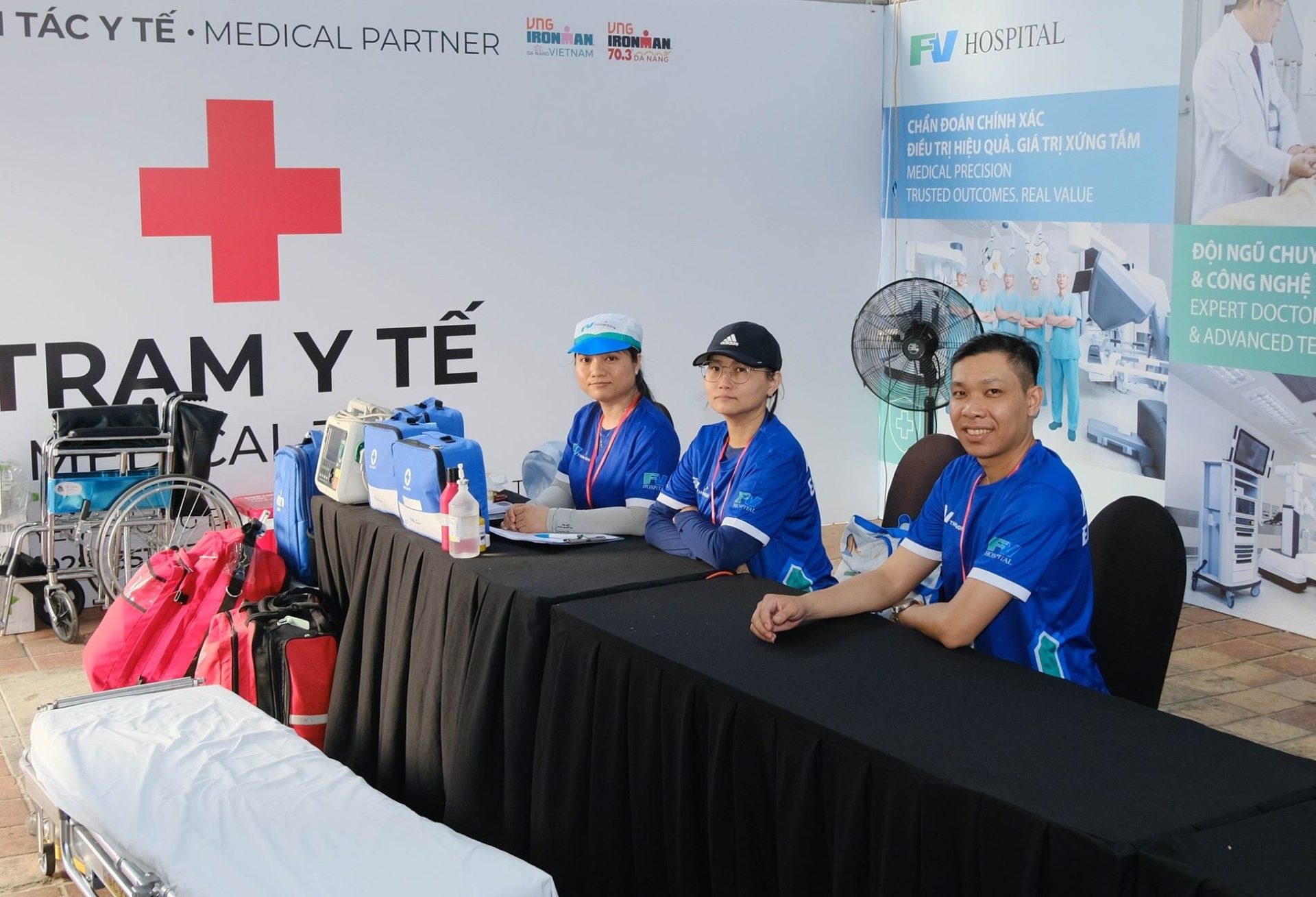
Emergency doctors and experienced nurses from FV Hospital will be on duty throughout Ironman 70.3 Danang 2026 with advanced emergency equipment to help safeguard more than 3,500 athletes. In addition to its role as a medical partner, FV also provides in-depth health screening programs for athletes.
This year, thousands of athletes from 70 countries will gather in Danang to conquer Ironman 70.3 Vietnam 2026, the largest Ironman event ever held in Vietnam. Notably, Danang also hosted the full-distance 226-km race for the first time, making Vietnam the 32nd country in the world to qualify to host a full Ironman race.
A race against time for medical teams
Ironman is considered one of the most grueling tournaments on the planet. For the full-distance race, athletes must complete 3.8 km of swimming, 180 km of cycling, and 42.2 km of continuous running in hot and humid weather conditions.
In a high-intensity competitive environment, the body can quickly become dehydrated, suffer heatstroke, electrolyte imbalance, or cardiovascular events. This is why medical care has always been considered a critical pillar of international Ironman events.
According to FV Hospital, the emergency medical team at the event is equipped with a modern and comprehensive medical system meeting the standards of outpatient emergency care, including a defibrillator, a multi-parameter vital signs monitor, a portable ventilator, a mobile oxygen system, a portable suction device, and trauma immobilization equipment, specialized stretchers, along with a full range of medications and specialized emergency equipment.
In addition, the medical team is equipped with ambulances on standby to coordinate with the 115 Danang Emergency Center and cardiopulmonary resuscitation equipment to ensure a rapid response in all emergency situations.
Emergency teams are deployed throughout the race course and central medical tents are located in the event’s exhibition area, ready to access the scene in the shortest possible time to ensure maximum safety for all athletes and attendees.
Dr. Trinh Van Hai, head of the Accident and Emergency (A&E) Department, FV Hospital, said: “The most dangerous thing about Ironman is not common sports injuries but events such as cardiac arrest, heatstroke, or drowning. Responding just a few minutes faster can make a huge difference.”
It is no coincidence that FV has been chosen for this role. This hospital meets international JCI standards and has provided medical support for numerous high-level diplomatic events, including the 2016 visits to Vietnam by then U.S. President Barack Obama and then French President Francois Hollande. FV Hospital also provided medical sponsorship for Ironman 2025 in Phu Quoc, the Ravolution Music Festival 2022, a large-scale music event with tens of thousands of attendees, and many other large-scale sporting events.
Beyond emergency care: FV promotes safer and smarter sports participation
The key difference in FV’s strategy as a healthcare partner is that it goes beyond emergency response. Through its Sports Medicine Unit, the hospital is pursuing a comprehensive care model for the community of endurance athletes in Vietnam, from risk screening and fitness optimization to post-exercise recovery.
According to Dr. Nguyen Xuan Vinh, sports medicine specialist at FV Hospital, most athletes only seek medical attention after injury, while modern sports medicine focuses on early risk detection before the body exceeds its tolerance limit.
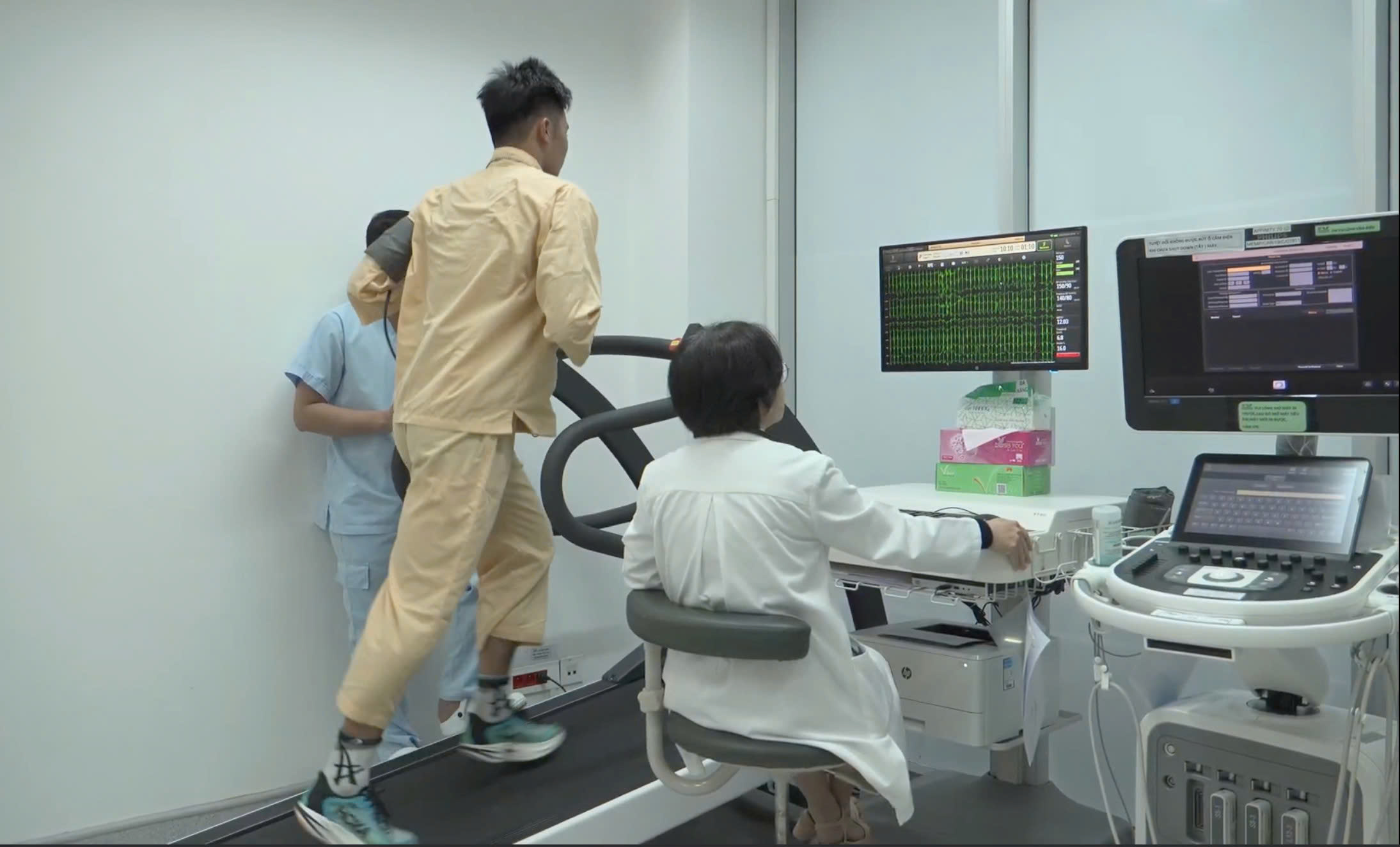
At FV, the pre-exercise health assessment (PPE) program includes electrocardiography, echocardiography, cardiopulmonary stress testing, metabolic testing, body composition index (InBody) measurement, and musculoskeletal assessment to help athletes understand their physiological limits and develop appropriate training plans.
This model was also sponsored by FV for the four athletes participating in this year’s Ironman. Among them is Vo Tri Trung, an athlete competing in Solo 70.3 for the first time after many years of relay competitions. Through an in-depth examination at FV Hospital, the medical team discovered that Trung showed signs of reduced kidney filtration function and promptly adjusted his training and nutrition regimen before the tournament.
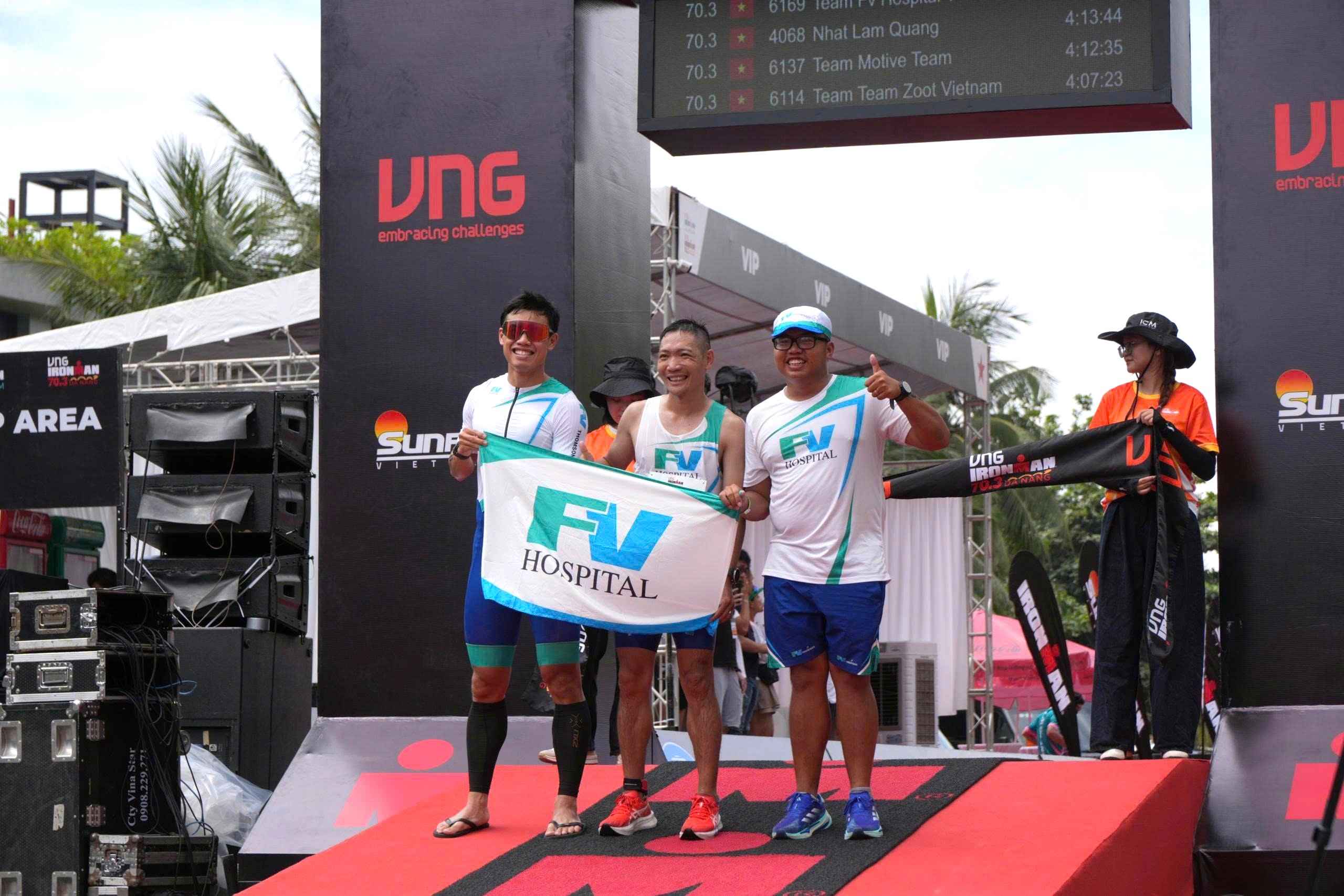
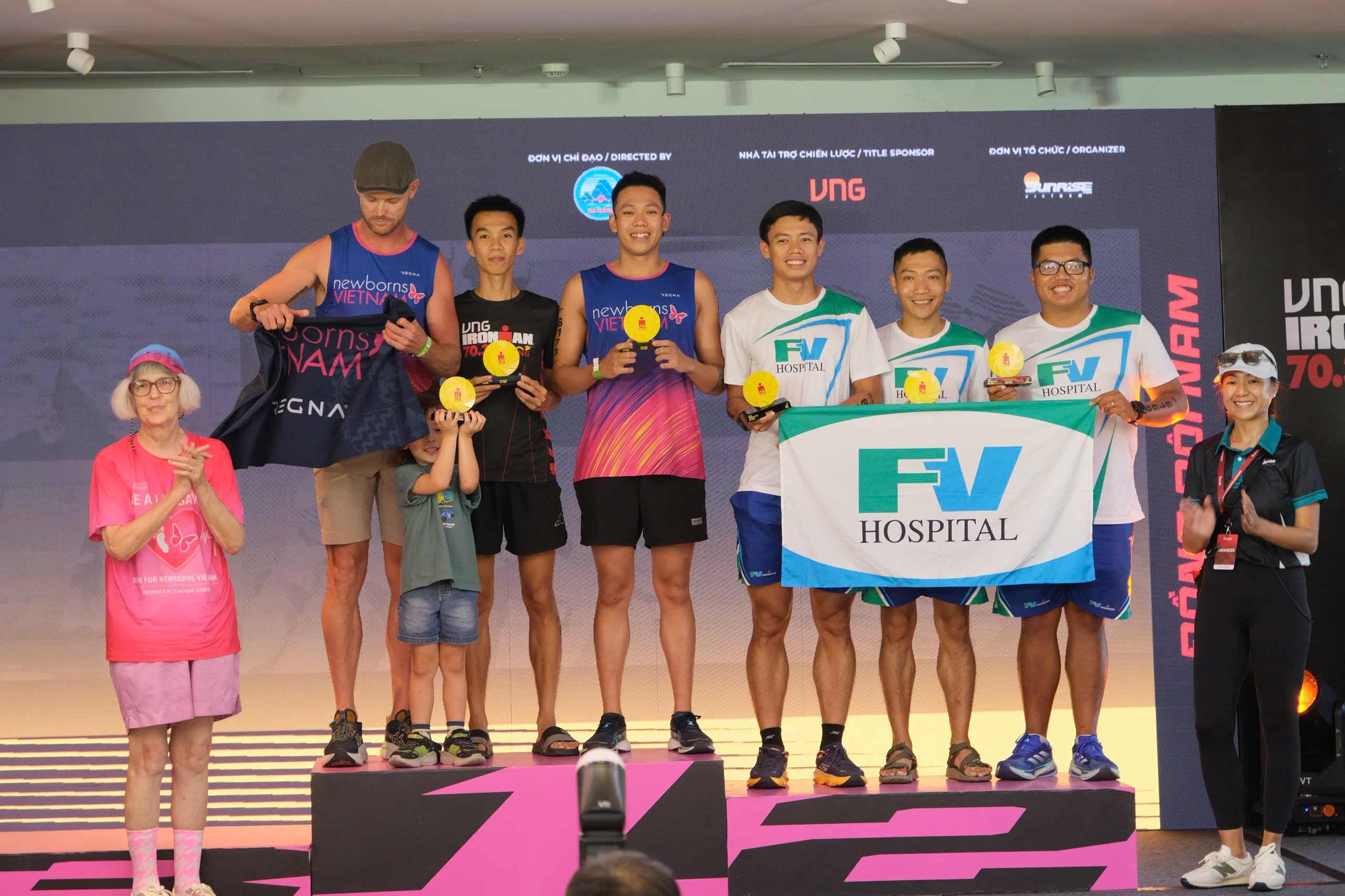
Notably, in this tournament, the FV Hospital 1 Relay Team, sponsored by FV and consisting of 3 athletes: Nguyen Dang Khoa, Tu Vinh Phat, and Doan Ngoc Hoang, finished second in the Men’s Relay (All male relay).
“Doctors not only read the results but also carefully analyze what pressure their bodies are under and how they need to change. That helps me feel more confident when entering an intensive training phase,” Trung shared.
Notably, this year FV also fielded two relay teams comprising six staff members to compete at Ironman. Images of office workers, doctors, and nurses taking part in the race are seen as a message about the scientific and sustainable lifestyle that the hospital pursues.
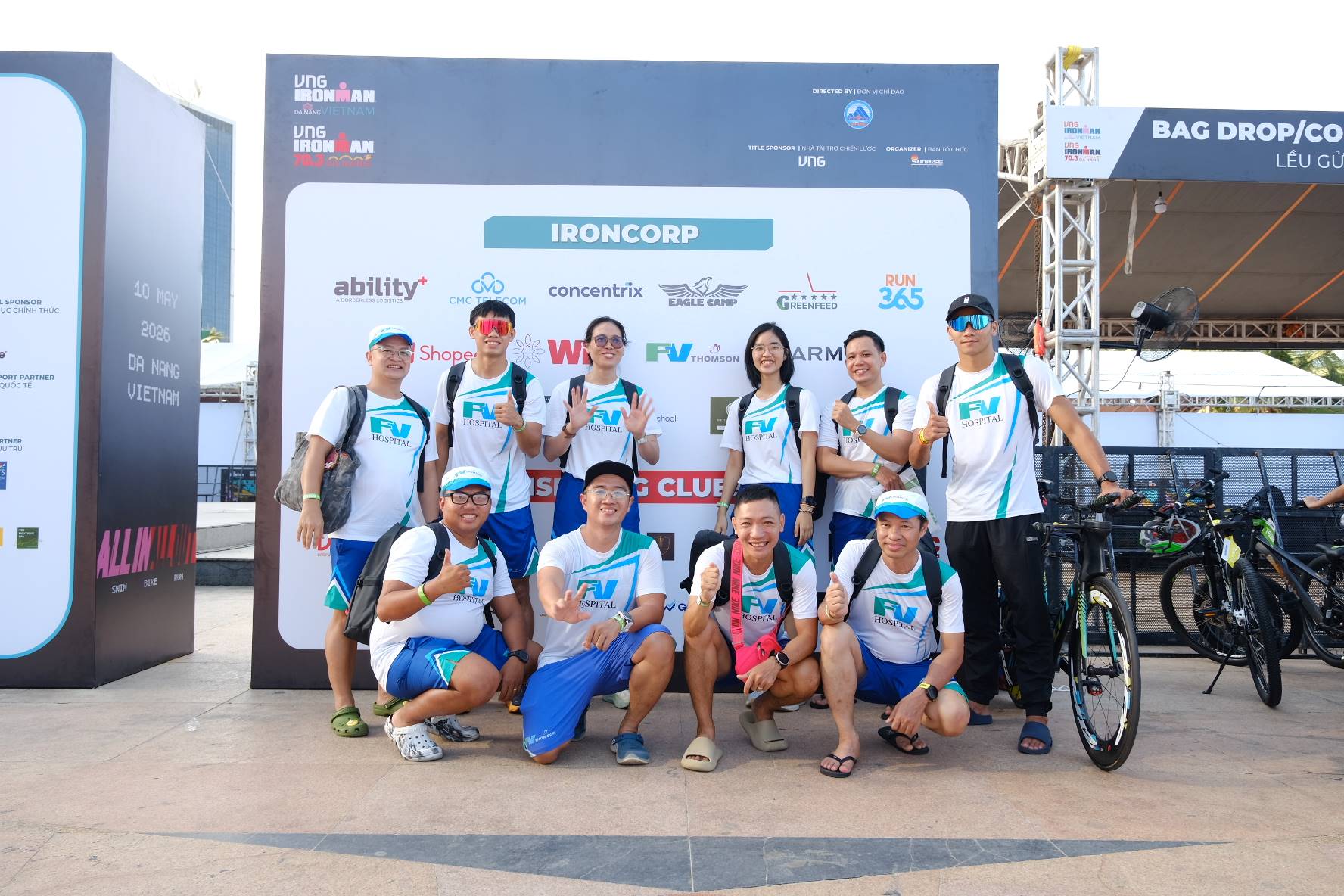
In the context of the booming marathon and triathlon scene in Vietnam, the emergence of specialized sports medicine models like FV is becoming an important part of the endurance sports ecosystem. Modern sports medicine not only protects athletes in critical situations, but also helps them train smarter, compete more safely, and push their limits safely.
For more information about the Sports Medicine Unit at FV Hospital, readers can visit at 6 Nguyen Luong Bang Street, Tan My Ward (formerly District 7), Ho Chi Minh City or contact the phone number (028) 35 11 33 33. 24/7 Emergency Hotline: (028) 35 11 35 00.