
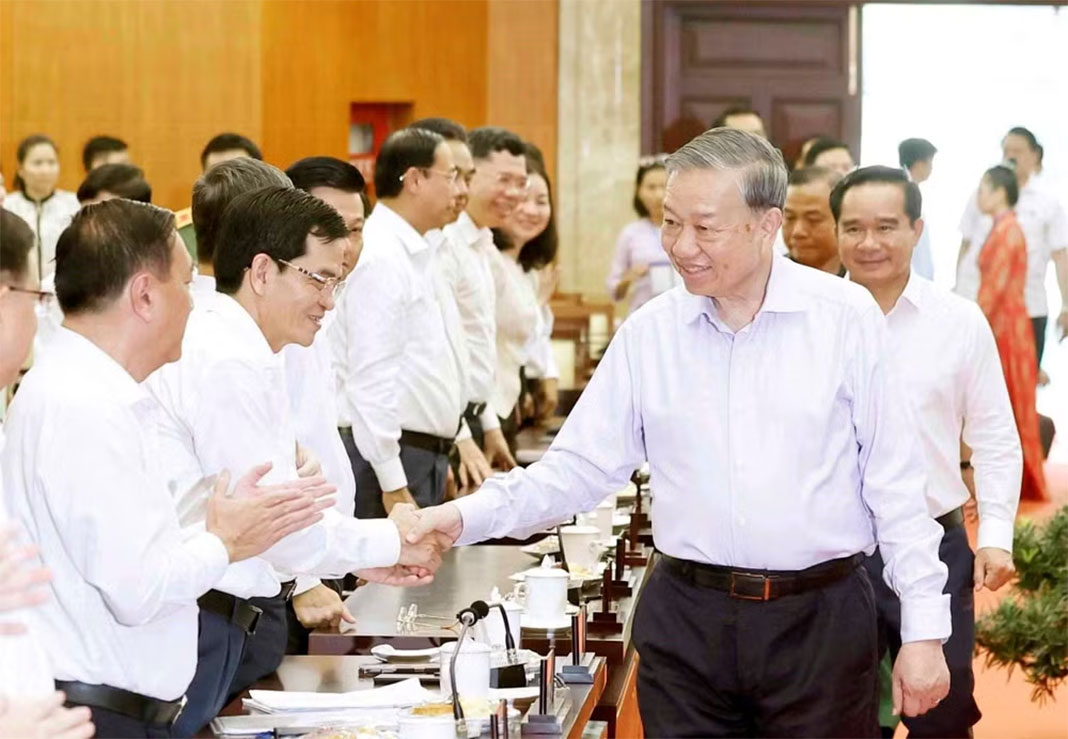
HCMC – A new Politburo resolution to replace the current Resolution 31 and the drafting of a special urban law are seen as decisive steps to create institutional and governance breakthroughs for HCMC’s next phase of growth, said Party General Secretary and State President To Lam.
He was speaking at his working session with the Standing Committee of the HCMC Party Committee today, April 27.
Both the resolution and the law must reflect the city’s stature, role and mission, focusing on governance innovation and enhanced fiscal autonomy supported by modern financial instruments.
New mechanisms should allow the city to retain a larger share of its resources, proactively mobilize capital, pilot new institutional models, and implement stronger decentralization, including the authority to design policies tailored to a megacity.
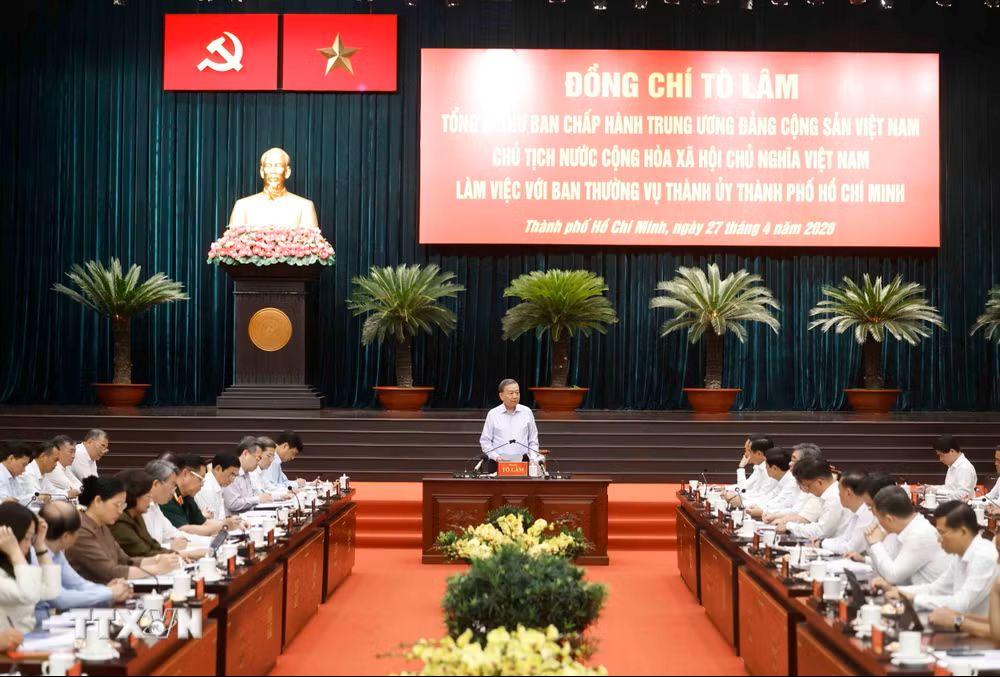
In parallel, HCMC should adopt exceptional talent attraction mechanisms to support long-term growth. Party General Secretary and State President To Lam stressed that the city must translate central policies into concrete development models, rather than stopping at action plans.
On the economic front, he told HCMC to clearly recognize its role in driving double-digit growth for the national economy, with a focus not only on quantity but also on quality and sustainability. He called for the removal of bottlenecks affecting capital, land, projects and investment opportunities, urging the city to decisively address legal, planning and investment hurdles while accelerating public investment disbursement.
In urban planning, he urged the city to move faster with a forward-looking approach. The city’s master plan for 2025–2050, with a 100-year vision, should integrate surface, underground and digital infrastructure, along with green corridors, to build a comprehensive development ecosystem.
The city aims to become a sustainable, innovative and livable megacity, developing multiple urban centers linked to international finance, free trade and modern logistics.
To Lam underscored that planning must be people-centered, aimed at improving quality of life while building a smart, ecological and culturally distinctive city, and ensuring national defense and security in the new context.







