
HCMC – The HCMC People’s Council on December 26 approved the investment policy for three major projects with a combined estimated capital of about VND182 trillion, to be implemented under public-private partnership (PPP) and build–transfer (BT) models.
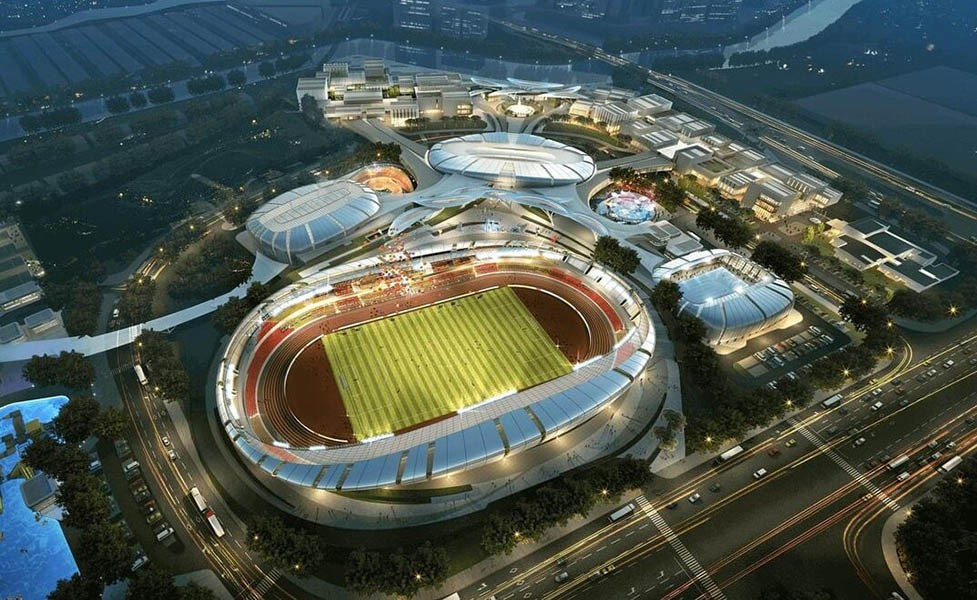
The largest project is the Rach Chiec National Sports Complex, covering nearly 187 hectares in Binh Trung Ward, with a proposed investment of VND145.6 trillion. The project is scheduled to be carried out over eight years from the signing of the project contract.
According to the proposal, the complex will be developed into multiple functional zones, including a cultural and sports area with a stadium, indoor arenas, aquatic sports facilities, tennis courts, football fields, and a multi-purpose sports center. Other components include accommodation for athletes and coaches, public squares, a sports hospital, a conference and exhibition center, green parks, water surfaces, technical infrastructure and transport works. City authorities said the project is aimed at forming a national-level and regional-level sports center while creating additional public open space.
The municipal People’s Council also approved the Phu My 2 Bridge project, with an estimated total investment of around VND23.2 trillion. The bridge will span about 6.3 kilometers, linking Nguyen Huu Tho Street in HCMC with Lien Cang Road in Dong Nai Province. Designed with eight lanes, the project is expected to be implemented in the 2025–2029 period, with construction scheduled from 2026 to 2029 under a BT contract.
Once completed, the bridge is expected to improve connectivity between HCMC’s urban core, Tan Son Nhat Airport, Long Thanh International Airport, and the seaport system of HCMC and Dong Nai, supporting transport and logistics activities in the southern key economic region.
The third project is the Can Gio Bridge, with a total estimated investment of VND13.2 trillion. The project includes a bridge of nearly three kilometers crossing the Soai Rap River and approach roads, bringing the total route length to about 6.3 kilometers. The bridge is designed with six lanes and a speed limit of 80 kilometers per hour. The city budget is expected to contribute about VND3.4 trillion, with the remainder mobilized from private investors.
The Can Gio Bridge is intended to replace the Binh Khanh ferry and provide a direct road connection between the former Can Gio District, which now includes Binh Khanh, Nha Be, An Thoi Dong and Thanh An communes, and central HCMC. City authorities said the project is expected to improve traffic capacity and gradually complete the transport infrastructure network in the city’s southern area.