
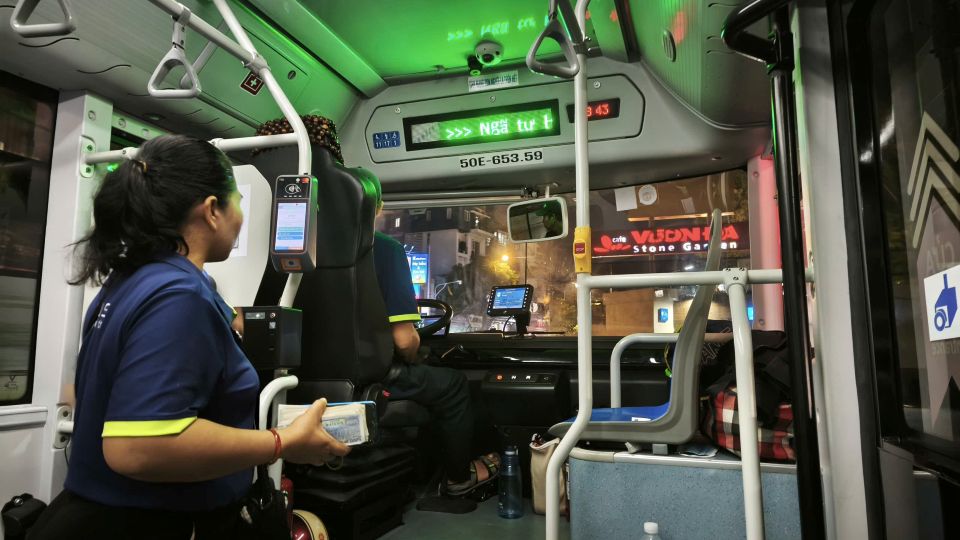
HCMC – Ho Chi Minh City is considering waiving bus fares for all residents from July 1 through the end of 2026, a move expected to cost an additional VND665 billion and aimed at boosting public transport use in the city.
The proposal, described as an unprecedented welfare measure, is expected to encourage people to shift away from private vehicles and help revive a public transport system that currently serves only a small fraction of travel demand.
According to a submission by the city government to the municipal People’s Council ahead of its June 19-20 meeting, the fare waiver would be implemented in two phases in line with the rollout of new technology.
In the first phase, from July to September, all bus rides would be free without requiring passenger identification, allowing residents to use the system with minimal barriers.
Beginning in October and running through the end of 2026, the city would continue to cover 100% of fares under a pay-as-you-go mechanism based on actual trips taken. Passengers would be required to authenticate their journeys using electronic cards or cashless QR-code payments. The policy would apply to all intra-city routes, including subsidized and non-subsidized services, but would exclude interprovincial routes, open-top sightseeing buses and airport shuttle services.
Following administrative restructuring, the expanded metropolis now operates 180 bus routes. City authorities said the proposal reflects the low popularity of buses among commuters. In 2025, public buses accounted for only 1.6% of commuting demand, far below the city’s target of 7.23%.
The city estimates that the additional VND665 billion needed for the second half of the year would raise total bus subsidy spending in 2026 to nearly VND2 trillion.
Officials see the policy not only as a social welfare measure but also as an investment intended to ease chronic traffic congestion and reduce pollution in the densely populated metropolis. Previous fare-free campaigns led to temporary surges in ridership, but passenger numbers fell once fares were reinstated, suggesting that private motorbikes remain more attractive in terms of convenience and cost.
The second phase’s requirement for electronic identification is also expected to improve oversight of the subsidy system. For years, concerns have been raised over fixed-route subsidy mechanisms that may not accurately reflect actual passenger volumes. By requiring riders to validate each trip through digital platforms, authorities expect to build a large database on travel demand and commuting patterns, providing a basis for optimizing routes and improving the efficiency of future subsidy spending.