
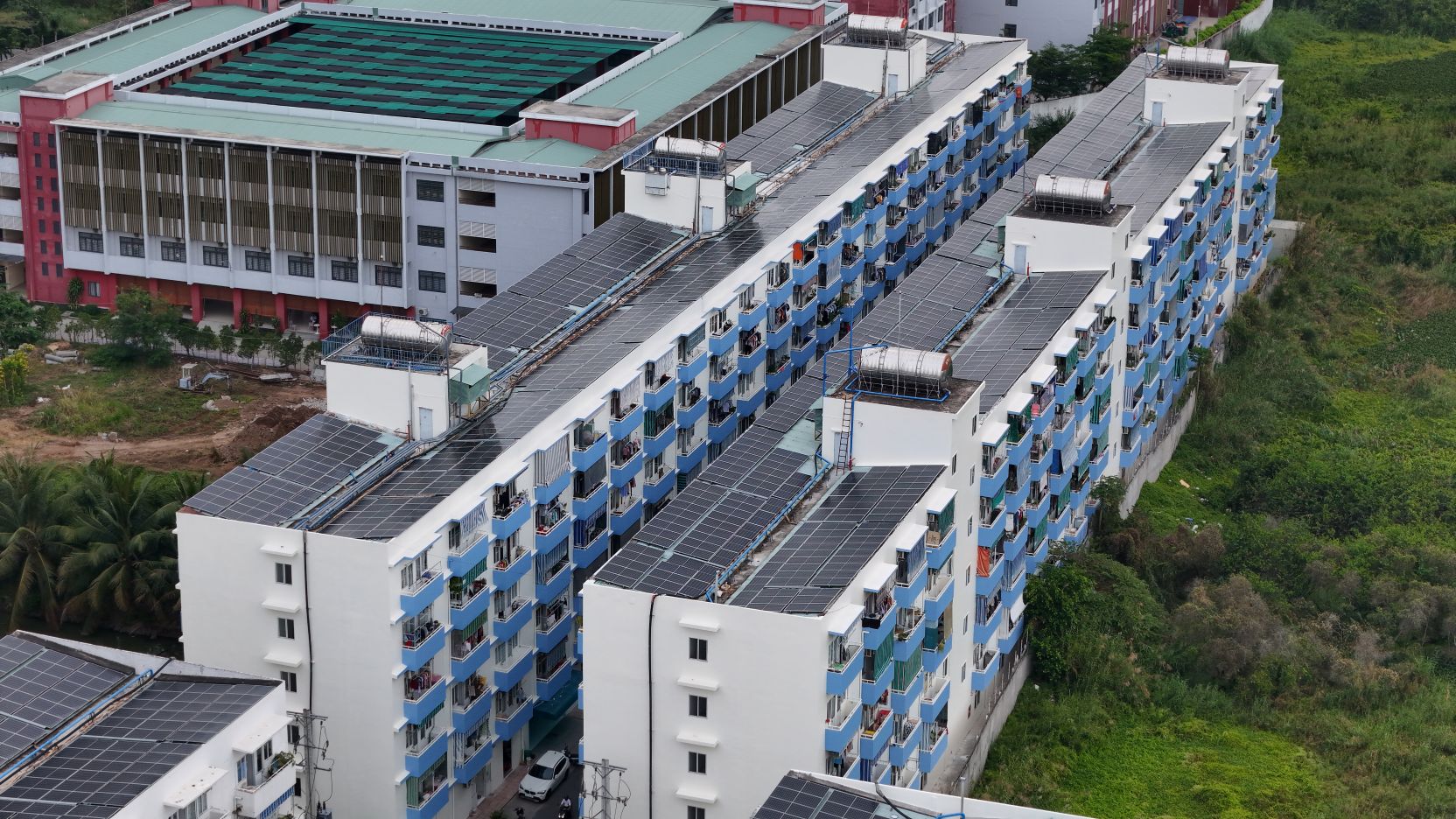
HCMC – Social housing projects are struggling to secure loans from a VND145-trillion package, with high interest rates and regulatory constraints cited as main reasons.
At a seminar on real estate credit on April 17, participants said financing barriers remain a key obstacle to expanding supply, even as demand stays high.
Le Huu Nghia, director of Le Thanh Company, said social housing is currently the most difficult segment to obtain bank loans. Although a preferential credit package is available, developers have been unable to access it because bank funding costs are higher.
Loan disbursement remains limited even when developers accept an annual interest rate of 13–14%, due to unclear guidance and restrictions linked to credit quotas.
Construction cost spikes of 10–30% and home selling price caps have made social housing projects less viable, weakening investor interest and slowing supply.
Le Hoang Chau, chairman of the HCMC Real Estate Association (HoREA), said credit risks are concentrated in high-end and speculative segments rather than social housing. He called for adjustments to credit policies, including easing lending caps and allocating annual credit quotas.
Chau also proposed maintaining preferential credit for social housing and extending it to affordable commercial housing. He suggested loan rates of 6–7% per year over 10–12 years to improve homebuyer access.
Participants at the seminar said priority should be given to financing developers to increase supply, noting that buyers can only access loans when projects are available.
Nguyen Huu Huan, deputy head of the executive board of the Vietnam International Financial Center in HCMC (VIFC-HCMC), said the center is expected to open new funding channels. It will operate under a regulatory sandbox, allowing models such as real estate tokenization and digital assets linked to projects.
The Government has raised the income ceiling for social housing buyers to VND25 million per month for single individuals, expanding eligibility.
According to the Ministry of Construction, 66 social housing projects were approved in the first quarter of 2026, with more than 7,000 units.