
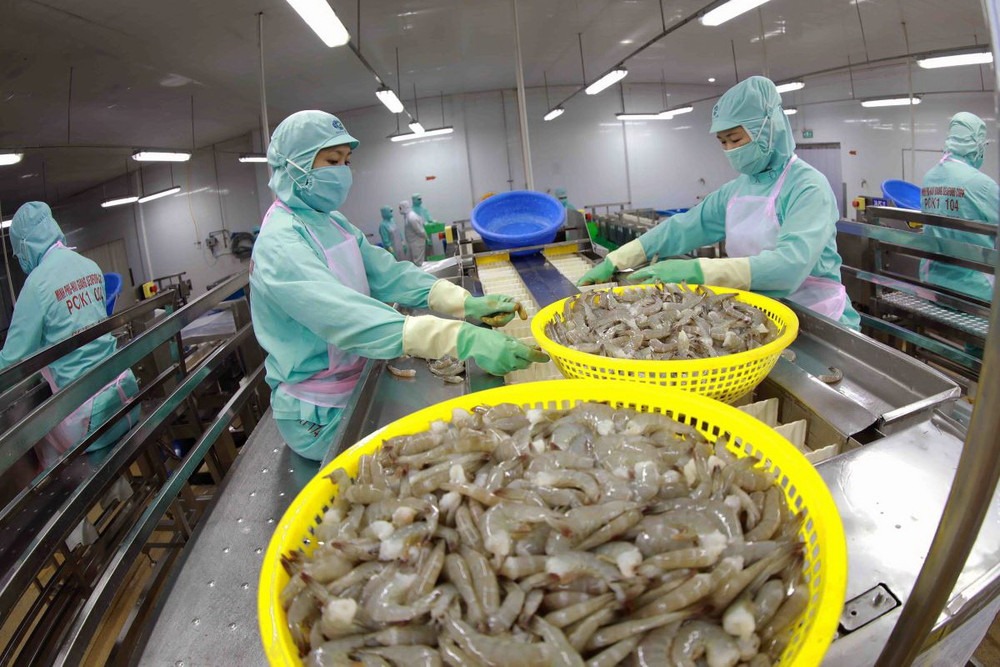
HCMC – Vietnam’s seafood export revenue in 2026 could rise by around US$1 billion from the 2025 level of approximately US$11.3 billion if current growth is sustained and bottlenecks are addressed, according to the Vietnam Association of Seafood Exporters and Producers (VASEP).
From the beginning of 2026 to date, aquaculture has recorded favorable conditions, with seafood export value estimated at nearly US$4 billion, up 11.9% year-on-year. In April alone, exports reached an estimated US$947.8 million, bringing the four-month total to US$3.59 billion.
According to the Ministry of Agriculture and Environment, total seafood output in the first four months of 2026 was estimated at over three million tons, up 3.1% against the same period last year. Of this, fish output grew 2.5% to 2.2 million tons, while shrimp output totaled 368,600 tons, up 6.6%. Aquaculture production was estimated at nearly 1.8 million tons, up 5.2%, while capture output edged up 0.1% to nearly 1.3 million tons.
In April, total seafood output was estimated at 831,700 tons, up 2.8% year-on-year, including 471,600 tons from aquaculture, up 4.8%, and 360,100 tons from capture, up 0.2%.
China, Japan and the U.S. remained Vietnam’s three largest seafood export markets, accounting for 26.7%, 13.8% and 13% of total exports, respectively. Export value to China rose 52.3% year-on-year in the first four months, while shipments to Japan increased 1.8% and exports to the U.S. declined 7.4%.
Among the country’s top 15 seafood export markets, China posted the highest growth, while the U.S. recorded the only decline. Pangasius exports fell by around 6%, while most other product groups maintained growth.
VASEP said the U.S. market declined due to policy pressures and trade barriers, including investigations related to subsidies, labor and other trade issues, particularly affecting shrimp exports. In Europe, stricter requirements on traceability, environmental standards and social responsibility, along with the continued application of the yellow card warning over illegal, unreported and unregulated (IUU) fishing, have added compliance requirements.
Domestically, seafood processors reported rising compliance costs, including the need to invest in separate wastewater treatment systems even when located in industrial zones.
VASEP said measures to support export growth in 2026 include improving the business environment, reducing compliance costs and addressing regulatory obstacles. Increased dialogue between regulators and businesses is also needed to respond to changes in international markets.







