
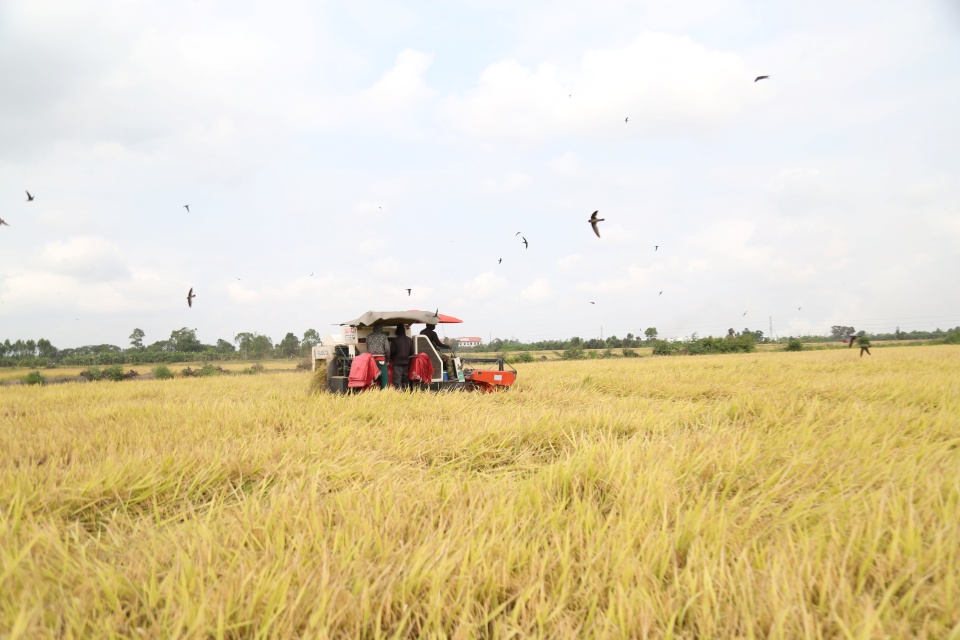
HCMC – Despite an abundant Winter–Spring harvest, Vietnam’s rice export sector is coming under pressure as geopolitical tensions in the Middle East and rising shipping costs squeeze exporters and farmers in the Mekong Delta.
Harvesting in key rice-growing provinces such as An Giang and Vinh Long has largely been completed, with yields reaching an impressive 6.7 to 7.8 tons per hectare. However, the supply glut is creating a paradox, increasing pressure on storage capacity and cash flow.
Disruptions linked to tensions around the Strait of Hormuz have clogged supply chains to the Middle East and Europe. Many shipments have been forced to remain at transshipment ports near India or turn back at Singapore, preventing exporters from receiving payments under letters of credit while incurring borrowing costs of over 9% per year and rising storage fees.
The ripple effects are feeding back into the domestic market. Higher fuel prices are pushing up harvesting and transportation costs, and are expected to drive up production expenses for the upcoming Summer-Autumn crop. In Vinh Long and An Giang, while companies are trying to maintain paddy prices above VND6,000 per kilogram, traders’ hesitation amid stricter requirements on input transparency and cashless payments has led to localized stockpiles.
This has weakened the competitiveness of Vietnamese rice against rivals, while key markets such as the Philippines are delaying purchases in anticipation of lower prices.
Amid volatile market conditions, experts say the sustainable path forward lies in improving quality rather than expanding output. Cooperative models in Vinh Long have shown effectiveness, helping farmers cut production costs by 10–15% through organic and low-emission farming practices.
High-quality rice varieties such as ST25, along with traceable growing area codes, are expected to help exporters better manage supply and negotiate prices in the second quarter, as import demand from the Philippines and African markets is forecast to rebound in May and June. Particularly, the Philippines, Vietnam’s largest traditional rice buyer, is expected to import at least 600,000 tons in May alone.







