
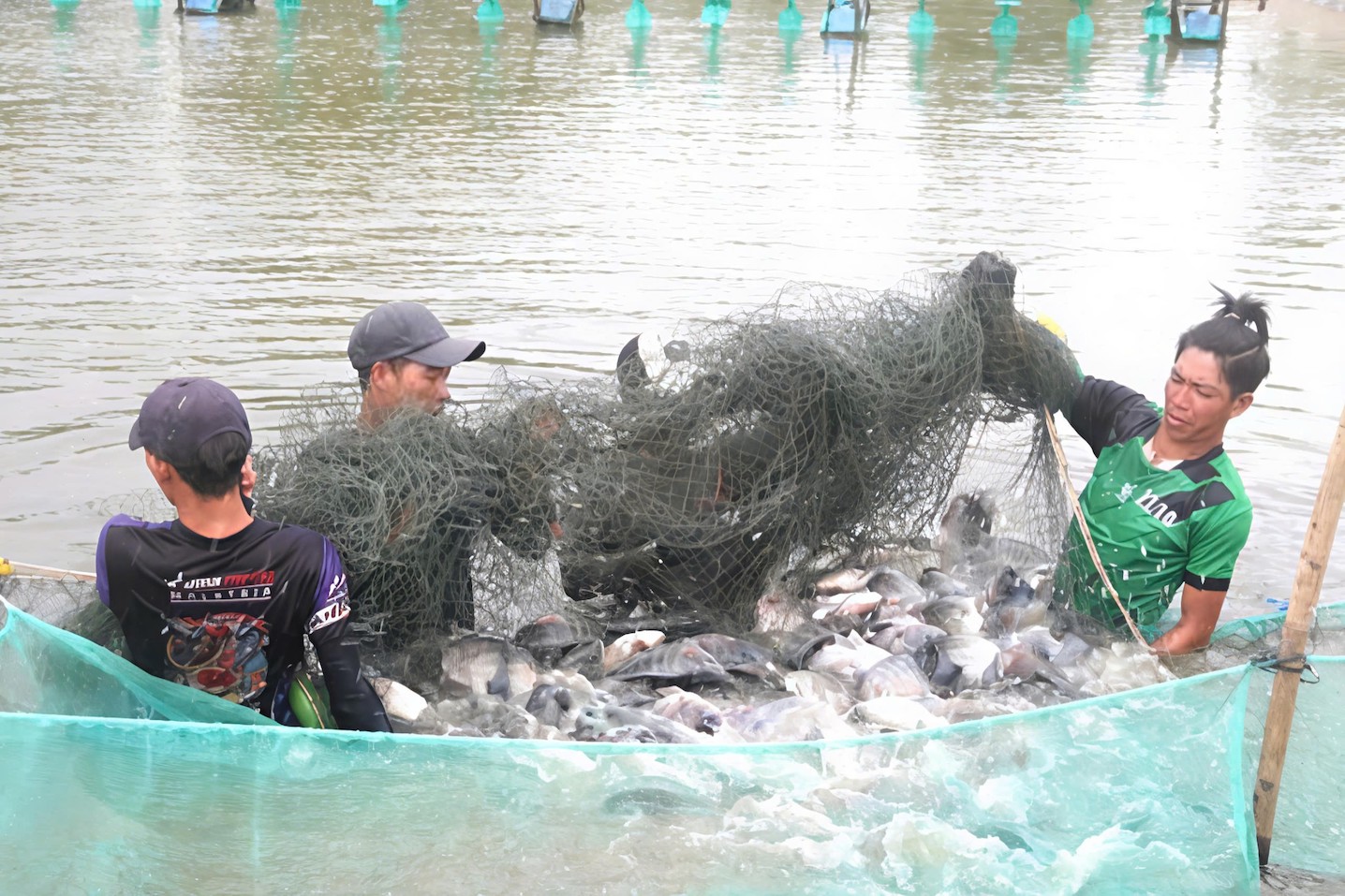
HCMC – Vietnam’s tilapia exports are increasing sharply in early 2026, but farming productivity and profitability remain insufficient to support expansion, industry representatives said.
Data from the Vietnam Association of Seafood Exporters and Producers (VASEP) showed tilapia export revenue reached US$99 million last year, up 141% against 2024. In the first two months of 2026, exports totaled US$23 million, rising 242% year-on-year.
The export trajectory is comparable to the early stage of the pangasius (tra fish) sector about 26 years ago. Between 1998 and 2001, Vietnam’s pangasius exports to the U.S. rose from around 260 tons to 3,000 tons and 8,000 tons. Export value increased from over US$25 million in 1997–2001 to nearly US$1.5 billion in 2002–2006 and US$7 billion in 2007–2011. Current pangasius exports are about US$2 billion annually, with farming area exceeding 5,000 hectares and output of around 1.7 million tons.
Industry participants said Vietnam has basic conditions for tilapia farming, particularly in the Mekong Delta. However, profitability remains a constraint. According to enterprises, tilapia yields are lower than pangasius. On the same farming area, pangasius can yield around 100 tons, compared to 20–30 tons for tilapia, reducing economic returns for farmers.
Low output prices have also affected farming activity. Some farmers suspended production in January and February 2026 due to weak profitability.
Competition from China is another factor. Reduced output in China last year created export opportunities for Vietnam, but a recovery in Chinese production may increase competition. In addition, increased exports to Mexico since 2025 have led to complaints from local producers.
Given these constraints, industry representatives said tilapia farming expansion may not match export growth unless profitability at the farm level improves.