
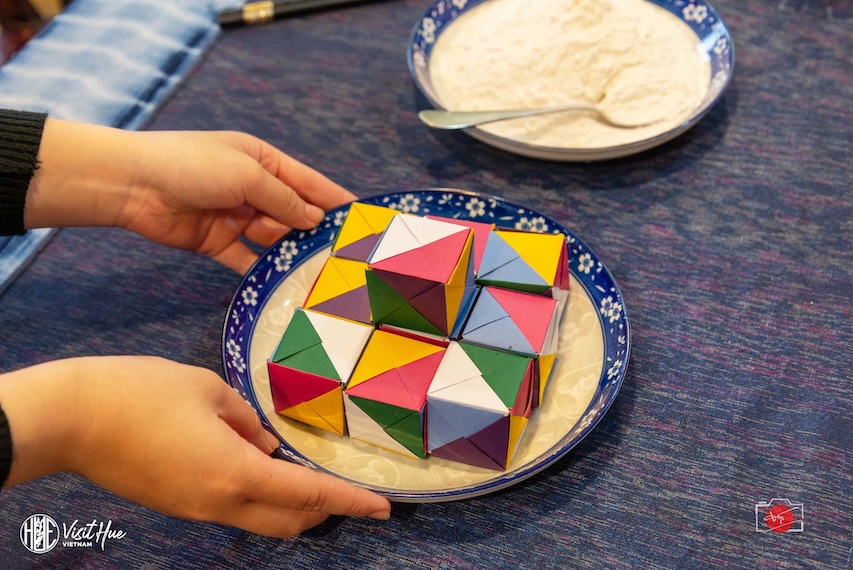
Phap lam cake is more than a delicacy. It reflects the refinement of Hue’s former imperial court. Modest in appearance yet intricate to prepare, the confection remains a quiet staple among locals, especially on special occasions.
The cake is also known by older names such as five-color cake or rolled cake, reflecting its handcrafted nature. While its exact origins are unclear, artisans trace it to the Nguyen Dynasty. In traditional Hue garden homes, surplus fruit was never wasted; it was sliced, dried, and simmered with sugar to make preserves. Over time, this practice evolved into the filling for phap lam cake, blending thrift with culinary creativity.
The modern name derives from phap lam, an enamel art once popular under the Nguyen emperors. The link lies not in the cake itself but in its vibrant packaging, whose colors echo the decorative principles of that craft.
Making the cake requires patience. Candied-fruit fillings, including ginger, kumquat peel, winter melon, or papaya, are slowly cooked until glossy and firm. Glutinous rice flour, often scented with pandan leaves, is then layered with the filling, kneaded, shaped, and sliced. Each piece is wrapped in a small, carefully assembled paper box.
Enjoyed with hot tea, the cake offers a gentle sweetness and soft texture.